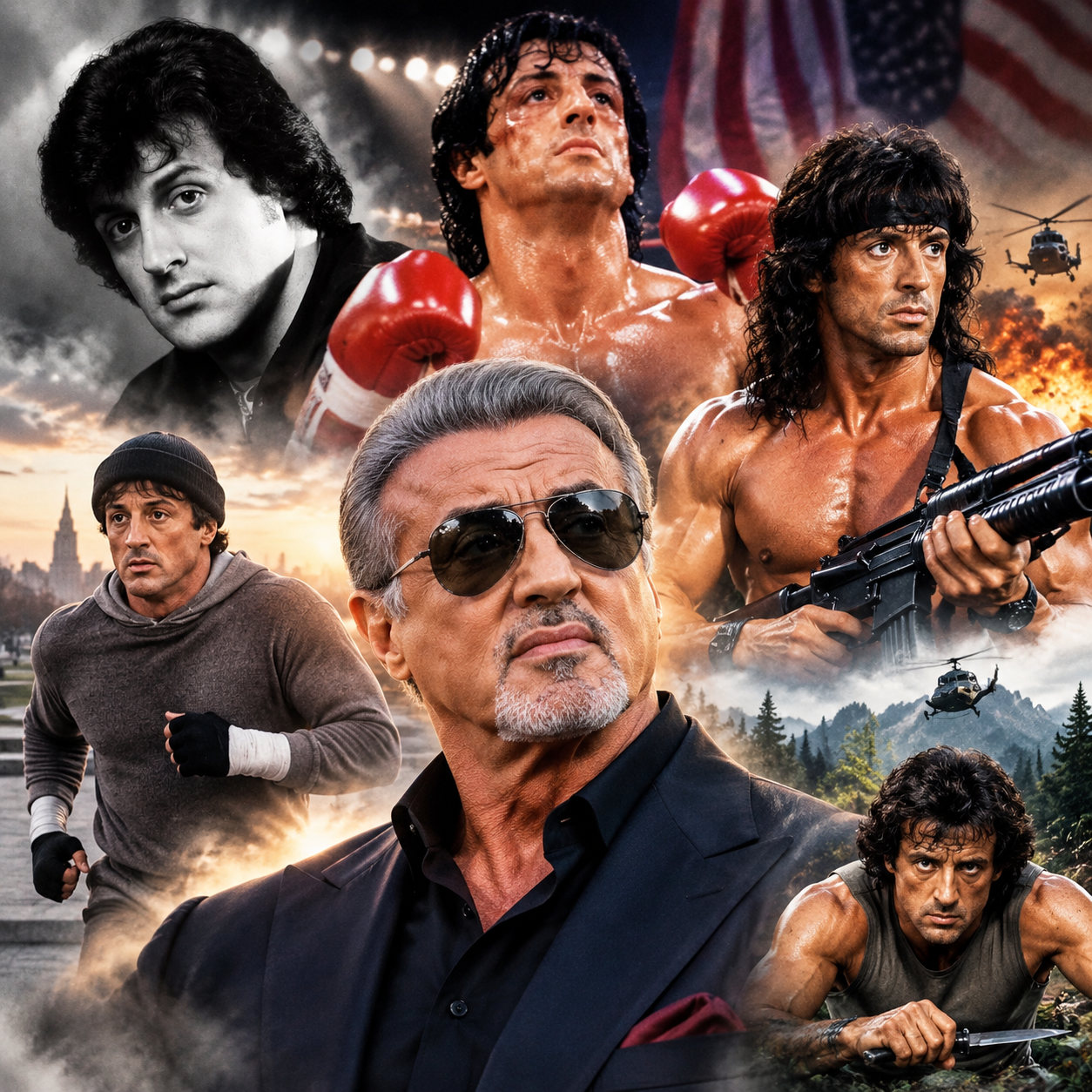

For more than five decades, Sylvester Stallone has been recognized as one of Hollywood’s most enduring figures. Through Rocky Balboa, John Rambo and a career filled with unforgettable performances, Stallone created a public image built around strength, determination and survival. To millions of fans, he became the man who could always get back up, the fighter who refused to stay down no matter how difficult the challenge became. But behind the powerful characters and the reputation of being one of cinema’s toughest icons was a much more complicated personal journey filled with struggles that audiences rarely saw.

Long before Hollywood celebrated his name, Stallone experienced years of uncertainty and rejection. His childhood was marked by difficulties that shaped the way he viewed himself and the world around him. Born with facial nerve damage caused by complications during his birth, Stallone grew up feeling different from those around him. The physical traits that later became part of his recognizable screen presence were once sources of insecurity rather than confidence. His early years were filled with challenges at home, struggles at school and moments when he felt like he did not fit into the environments around him.
Those experiences became part of the emotional foundation behind many of the characters he would later create. Unlike traditional Hollywood heroes who appeared flawless from the beginning, Stallone’s most famous characters were defined by imperfection. Rocky Balboa was not a champion when audiences first met him. He was a struggling fighter with little money, limited opportunities and a belief that one chance could change everything. The character connected with millions because Rocky’s greatest battle was not against another boxer — it was against the feeling that he might never matter.
That idea reflected Stallone’s own journey in Hollywood. Before becoming a global star, he spent years trying to find opportunities while facing repeated rejection. He worked small jobs, attended auditions and struggled to convince the industry that he belonged. Instead of waiting for someone else to give him the perfect role, Stallone decided to create his own opportunity by writing the story that would eventually become Rocky. His insistence on playing the lead character nearly cost him the project, but that decision became the turning point of his entire career.
When Rocky was released in 1976, everything changed. The film became a cultural phenomenon and transformed Stallone from a struggling actor into one of the most recognizable stars in the world. The success of Rocky Balboa created a franchise that lasted for decades and established Stallone as a filmmaker capable of writing, acting and creating characters that audiences connected with on a personal level. However, the fame that followed also brought enormous pressure. Maintaining the image of a Hollywood action hero meant constantly proving himself, taking on demanding roles and carrying expectations that few performers ever experience.

Behind the success were also moments of deep personal pain. In 2012, Stallone experienced one of the most devastating events of his life when his eldest son, Sage Stallone, died at the age of 36. The loss affected Stallone and his family profoundly. Unlike the battles portrayed in his films, this was not something that could be solved through determination, physical strength or another comeback. It was a different kind of struggle — one that required acceptance, time and the ability to continue living despite personal heartbreak.
As Stallone grew older, his understanding of strength also changed. His return to Rocky Balboa in 2006 showed audiences an older version of the character, one who was no longer chasing fame or proving himself to the world but instead dealing with memory, loss and the passage of time. Later, in Creed, Rocky became a mentor rather than the fighter standing at the center of the ring. The performance showed a different side of Stallone, one built not on physical dominance but on emotional honesty and experience.
His personal life also brought challenges that tested him beyond his professional career. In 2022, Stallone and Jennifer Flavin reached a major crisis after 25 years of marriage when Flavin filed for divorce. The situation became one of the most public and difficult moments of Stallone’s private life. The couple later reconciled, but the experience forced Stallone to reflect on his priorities and the balance between his career and family. For someone who spent decades chasing professional success, the moment revealed that some of the most important battles are not fought in front of cameras or audiences.
That realization became an important part of Stallone’s later years. The qualities that made him successful — ambition, discipline and the refusal to quit — helped build his legendary career, but they also required balance. Over time, Stallone appeared to gain a different understanding of what success truly means. Fame, awards and box-office achievements can create a legacy, but they cannot replace the relationships and personal connections that give life meaning.
This is ultimately what separates Sylvester Stallone from the characters he created. Rocky Balboa and John Rambo became symbols of physical endurance, but Stallone’s real story is about something more human. It is about facing rejection before success, experiencing loss after fame, making mistakes despite achievement and continuing to move forward despite difficult moments.
The world remembers Stallone as the man who played unbreakable heroes, but the most powerful part of his story may be that he was never truly unbreakable. He experienced doubt, failure, heartbreak and uncertainty just like anyone else. What made him different was not the absence of struggle, but the willingness to continue through it.
After more than 50 years in Hollywood, Sylvester Stallone’s greatest legacy is not only the characters he created or the movies that made him famous. It is the message that has connected with generations of fans: life will knock you down, but the fight is defined by whether you choose to stand again.