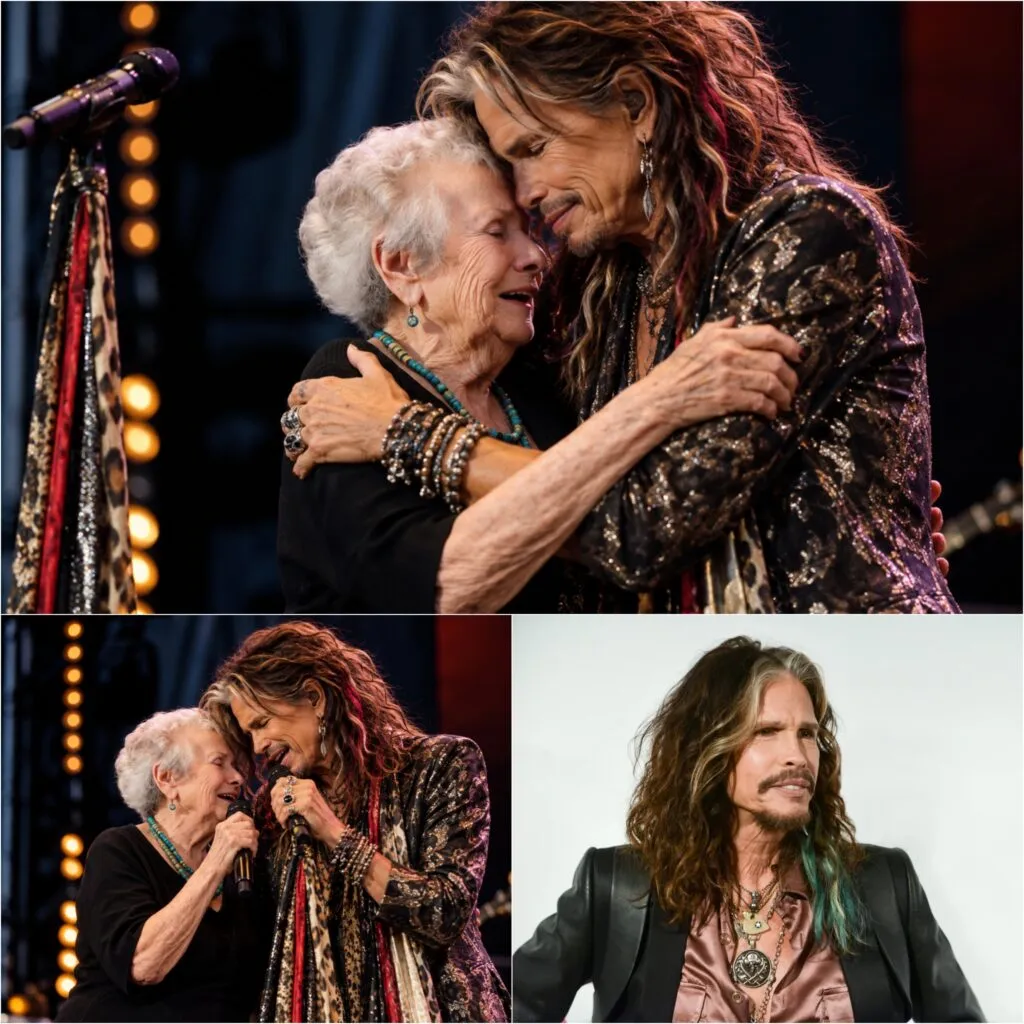

For more than five decades, Sylvester Stallone has been associated with characters who survive through determination. Rocky Balboa endured punishment inside the boxing ring and kept moving forward. John Rambo survived hostile environments with little more than his training, instincts and extraordinary will to live. Those characters helped establish Stallone as one of Hollywood’s most recognizable symbols of physical and emotional endurance. Yet the quieter image of Stallone enjoying the outdoors with his family suggests a very different idea of what strength can mean when the cameras are no longer rolling.
The contrast is particularly striking because wilderness has played such an important role in Stallone’s cinematic identity. In the Rambo films, nature is frequently presented as unforgiving terrain that must be understood and conquered. Rambo moves through forests and mountains as someone trained to survive alone, turning the environment itself into part of his strategy. Camping with family, however, transforms that same kind of landscape into something completely different. The woods are no longer a battlefield. They become a place to slow down, share meals, talk and spend uninterrupted time together.

That difference says something important about the distance between Sylvester Stallone and the characters audiences associate with him. Stallone has spent much of his career portraying men who carry enormous burdens by themselves, but his public life has also frequently emphasized the importance of family. He and Jennifer Flavin have three daughters together — Sophia, Sistine and Scarlet — while Stallone is also the father of Seargeoh and his late son Sage from his previous marriage to Sasha Czack. Across interviews, television appearances and social media over the years, audiences have seen glimpses of a Stallone who is considerably more playful and family-oriented than the hardened screen personas that made him famous.
That side of his personality became especially visible through The Family Stallone, the reality series that followed Stallone, Flavin and their daughters. Rather than focusing on boxing rings, battlefields or Hollywood action sequences, the series presented everyday family dynamics: conversations between parents and children, jokes, disagreements, relationships and the challenges of watching children become independent adults. It offered audiences an intentionally different version of Stallone — not the invincible action hero, but a father navigating ordinary family life.
An outdoor family escape fits naturally into that contrast. There is something almost symbolic about replacing movie premieres and elaborate sets with a tent, camping chairs, a lantern and food shared around a picnic table. None of those things carry the spectacle associated with a Hollywood star, yet that simplicity is precisely what gives such moments their emotional appeal. Camping strips away many of the structures that dominate everyday life. There are fewer distractions, fewer schedules and fewer places to disappear into separate routines. People eat together, walk together and eventually sit together when the daylight disappears.
For families whose lives are frequently busy, those ordinary experiences can become surprisingly valuable. Psychological research on family leisure has long suggested that shared activities can support family cohesion and communication, although no single weekend can magically create strong relationships. What matters is the opportunity for repeated, meaningful interaction. A walk through the woods or a meal around a campsite may appear insignificant compared with an expensive vacation, but memory is not necessarily determined by price. Small rituals and shared experiences can become powerful precisely because people associate them with belonging.

That idea also connects unexpectedly well with the themes that have followed Stallone throughout his career. His most enduring stories have rarely argued that strength means living without difficulty. Rocky succeeds emotionally because he accepts struggle rather than avoiding it. Rambo survives because he adapts. Even later Stallone characters frequently revolve around loyalty, aging, loss and the importance of the people who remain when circumstances become difficult. Beneath the action, those stories repeatedly return to relationships and endurance.
The difference is that family life changes the definition of endurance. There is no opponent to defeat and no mission to complete. Strength can instead mean remaining present, listening and protecting time together from the demands competing for it. For a public figure whose professional life has involved decades of production schedules, promotional tours and constant attention, moments away from that machinery can carry a significance that is easy to underestimate.
There is also a broader reason images of celebrities doing ordinary things attract so much attention. Stardom creates distance. Audiences usually encounter actors under carefully controlled circumstances — on movie screens, magazine covers, television interviews or red carpets. A simple outdoor setting removes much of that visual language. Expensive suits disappear. Elaborate lighting disappears. The environment becomes recognizable to anyone who has packed a cooler, struggled with a tent or gathered around a table after spending the day outside.
For Stallone, that ordinary setting produces an especially powerful contrast. The man audiences watched running up the Philadelphia Museum of Art steps as Rocky or moving through dangerous terrain as Rambo is also a father whose life cannot be reduced to the characters he played. That distinction becomes more meaningful as both an actor and his audience grow older. Careers evolve, children become adults and priorities inevitably change.
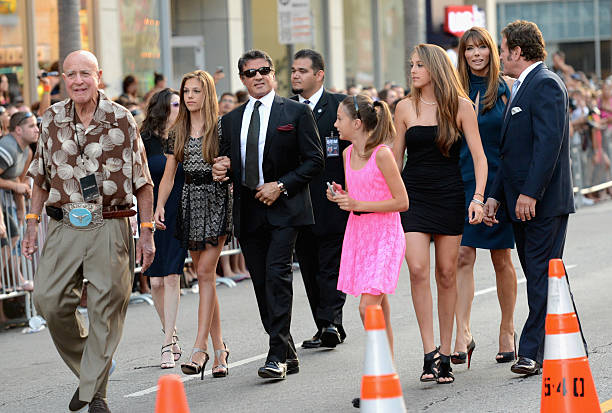
Perhaps that is why the image of a quiet family camping trip can resonate alongside the spectacular scenes that made Stallone famous. One represents the mythology of Hollywood: danger, triumph, extraordinary physical endurance and the individual hero standing against impossible odds. The other represents something far more familiar: people sitting together, eating simple food and enjoying the temporary absence of everything demanding their attention.
Rambo’s wilderness was about surviving alone. A family campsite represents almost the opposite idea. It suggests that life does not always have to be approached as an individual battle and that independence is not the only form of strength. Sometimes the people beside us are not obstacles to self-reliance but part of what makes difficult journeys worth taking.
After decades of playing characters defined by fighting, surviving and refusing to surrender, Stallone’s quieter family moments offer a useful reminder that a meaningful life cannot be measured only by victories. Careers eventually slow down, premieres end and movie sets are dismantled. What remains are relationships, memories and the ordinary experiences people were present enough to notice.
For a Hollywood legend associated with some of cinema’s toughest survivors, perhaps there is something fitting about finding peace beneath the trees. The wilderness does not always need to be conquered. Sometimes it is simply a place to sit down with the people you love and enjoy being together.