

There are some places that do not simply belong to the past. They wait quietly inside a person, holding the sounds, smells, voices, and memories that shaped who they became. For Reba McEntire, that place has always been Oklahoma.
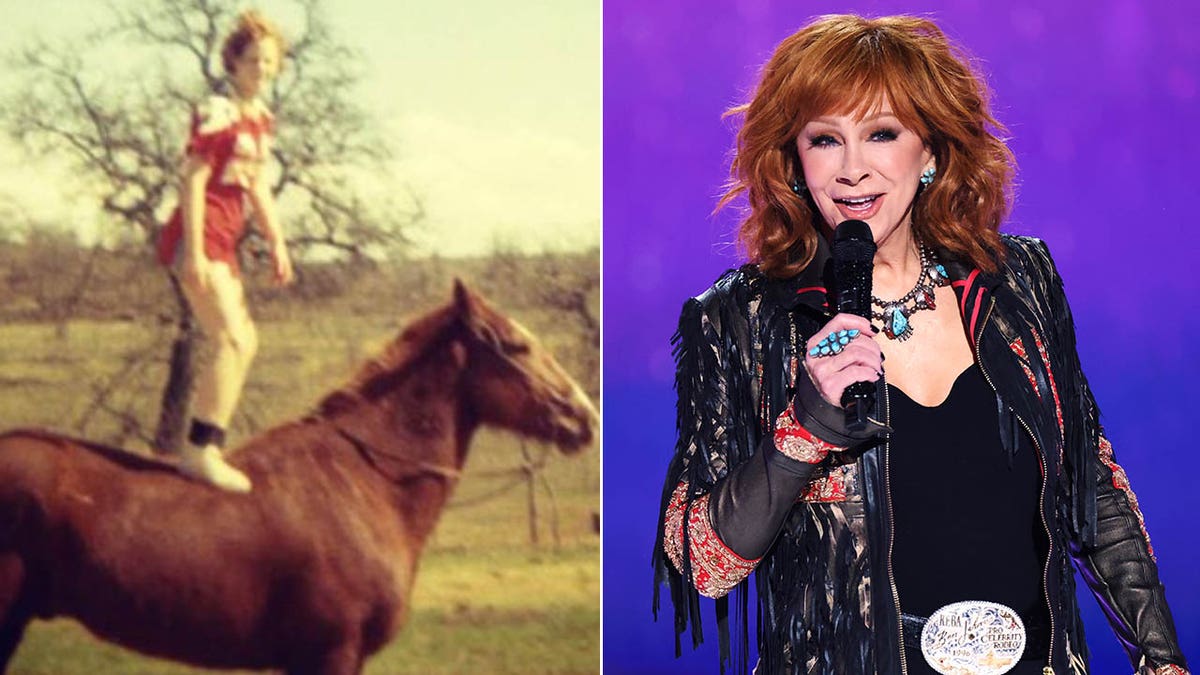
Long before the awards, television shows, sold-out concerts, and the title “Queen of Country,” Reba was a red-haired girl growing up in Chockie, Oklahoma, surrounded by ranch land, rodeos, family work, and music. The world would later know her as one of country music’s most powerful voices, but the emotional roots of that voice were planted at home — in the lessons of her father, the encouragement of her mother, and the childhood memories that never truly left her.
That is why the image of Reba returning to the old home where she grew up feels so meaningful. It is not just a celebrity revisiting a childhood address. It is a woman walking back into the beginning of her own story.
The Oklahoma Home That Built Her
Reba McEntire was born in McAlester, Oklahoma, and raised in nearby Chockie on an 8,000-acre cattle ranch. Her father, Clark McEntire, was a champion roper, and her mother, Jacqueline “Jackie” McEntire, was a powerful singer who became one of the strongest musical influences in Reba’s life.
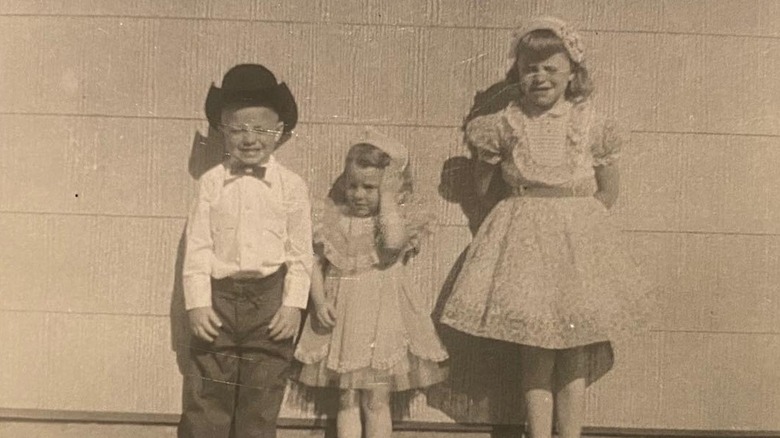
That childhood was not soft or easy. Ranch life required responsibility. Reba and her siblings grew up around cattle, horses, rodeo travel, chores, discipline, and the kind of work ethic that does not wait for applause. Before Reba ever learned how to hold a stage, she learned how to show up, work hard, and keep going.
Those early lessons would later become part of her career. Country music can reward image, but it lasts because of truth. Reba’s truth came from home: the dust of Oklahoma roads, the demands of ranch life, the competitive spirit of rodeo, and the emotional complexity of family love.
Remembering Her Father
When Reba thinks of home, it is impossible not to think of her father.
Clark McEntire was a rodeo man, a world champion steer roper, and a figure of strength in Reba’s early life. The Encyclopedia of Oklahoma History and Culture notes that Clark won world championships in steer roping in 1957, 1958, and 1961.
For a child, a father like that can seem larger than life: tough, quiet, disciplined, and deeply connected to the land. But country music has always understood that love is not always loud. Sometimes love is shown through work. Sometimes it is shown through sacrifice. Sometimes it is present every day, but rarely spoken in the words a child longs to hear.
That emotional truth is exactly why “The Greatest Man I Never Knew” feels so fitting when speaking about Reba’s memories of home and fatherhood. The song, released by Reba in the early 1990s, is not simply about grief. It is about realizing, often too late, that a parent’s silence may have been full of love.
The lyrics tell the story of a father who lived in the same house but remained emotionally distant, a man whose love was real but rarely expressed in ways his child could understand at the time. In Reba’s hands, the song becomes devastating because she does not overstate the pain. She lets it breathe.
The Mother Who Gave Her Music
If Clark represented discipline and endurance, Jackie McEntire represented the musical dream.
Reba’s mother loved music and encouraged her children to sing. People has reported that Reba, Susie, and Pake developed their passion for music early, taught by their mother, and became known as “the singing McEntires” in high school.
That influence cannot be overstated. Jackie did not simply teach songs. She helped her children believe music had a place in their lives. In many families, talent stays hidden because no one nurtures it. In the McEntire family, music became part of home life, part of identity, and eventually part of destiny.
Years later, after Jackie’s death in 2020, Reba spoke openly about how deeply the loss affected her. Southern Living reported that Reba once considered stepping away from music after her mother died, because Jackie had been such a driving force behind her career.
That detail makes Reba’s return-home story even more emotional. When she remembers the old house, she is not only remembering walls and rooms. She is remembering the mother who heard music in her before the world did.

A Song Born From Unspoken Feelings
“The Greatest Man I Never Knew” is one of the clearest examples of Reba’s ability to turn private emotion into something universal. Even listeners who never grew up on a ranch, never knew Oklahoma, and never stood beside a rodeo arena can understand the ache of the song.
It speaks to anyone who has ever loved a parent but struggled to understand them.
It speaks to anyone who wishes they had asked more questions.
It speaks to anyone who has looked back and realized that silence did not mean absence.
It speaks to the painful truth that sometimes love is only fully understood after time has passed.
That is why the song fits so naturally with the image of Reba returning to her childhood home. A place like that holds more than memories. It holds unfinished conversations.
Perhaps she remembers the sound of her father coming in after work. Perhaps she remembers her mother’s voice filling the house with music. Perhaps she remembers childhood moments that seemed ordinary then but now feel precious beyond measure.
That is the strange power of home. It changes as we age. What once felt small becomes sacred.
Why Fans Feel the Emotion
Fans have always connected with Reba because she does not sing as if she is separate from the stories. She sings as if she has lived inside them.
That is true in heartbreak songs, survival anthems, family ballads, and songs about women finding their strength. Reba’s voice carries experience. It carries Oklahoma. It carries humor, grief, faith, pride, and resilience.
When she sings “The Greatest Man I Never Knew,” fans do not hear a performer simply interpreting lyrics. They hear a daughter understanding something about love, distance, and memory. They hear the ache of growing older and seeing parents differently than we did as children.
That emotional maturity is one reason the song remains so powerful.
Home Is More Than a Place
For Reba, Oklahoma is not just where she came from. It is part of how she became.
The ranch taught her discipline.
Her father taught her toughness.
Her mother taught her music.
Her childhood taught her how to observe people, how to feel deeply, and how to carry ordinary life into song.
That is the foundation of great country music. It does not need to invent emotion. It remembers it.
So when Reba returns to the old home where she grew up, the moment feels larger than nostalgia. It feels like a circle closing. The girl who once dreamed of singing has become a legend, but the legend still carries the girl inside her.
The Place Where the Voice Began
Reba McEntire’s career has taken her around the world, but the heart of her story still leads back to Oklahoma. Back to Chockie. Back to ranch roads, family voices, childhood chores, and the dreams her mother helped keep alive.
“The Greatest Man I Never Knew” may not be a diary entry, but it holds the kind of emotional truth that makes fans think of Reba’s father, her family, and all the things people wish they had said when there was still time.
That is why the song remains so moving. It reminds us that parents are often more complicated than we understand when we are young. It reminds us that love can be quiet. It reminds us that home keeps speaking long after we leave.
And for Reba McEntire, returning to where she began is not only a journey into memory.
It is a return to the roots of the voice that made millions feel less alone.