

Liverpool, England — 2026
Few artists in modern history have remained as culturally alive as The Beatles. Decades after the band officially ended, their music continues reaching new audiences with a force that feels almost impossible to explain purely through charts, awards, or historical influence alone. While countless legendary acts shaped popular music, The Beatles occupy a different emotional and cultural space entirely—one where nostalgia, innovation, memory, and identity have become permanently intertwined.

Part of that enduring power comes from the fact that The Beatles never felt distant from ordinary people despite their unimaginable fame. John Lennon, Paul McCartney, George Harrison, and Ringo Starr began not as untouchable celebrities, but as four young men from Liverpool chasing music with little certainty about where it might lead. That humanity remained visible even as the band transformed into the most influential cultural phenomenon of the twentieth century.
Their story therefore became larger than entertainment. It became symbolic of possibility itself.
Observers often note that nearly every era of The Beatles carries its own emotional identity. The early years represented youthful optimism, excitement, and the explosive energy of a generation discovering itself. As their music evolved, so did the emotional complexity within it. Albums like Rubber Soul, Revolver, Sgt. Pepper’s Lonely Hearts Club Band, The White Album, and Abbey Road reflected changing ideas about love, identity, spirituality, loneliness, conflict, and personal growth in ways popular music had rarely attempted before.
That artistic evolution helped listeners grow alongside them rather than simply consume their songs passively. Fans did not experience Beatles music as static nostalgia frozen inside a single cultural moment. Instead, different songs attached themselves to different stages of life. One generation danced to She Loves You as teenagers, cried to Let It Be during grief, fell in love listening to Something, or found comfort in Hey Jude during periods of uncertainty. The music became deeply personal because it continuously adapted emotionally to the people listening.

Music historians frequently describe The Beatles as revolutionary because they transformed songwriting, recording techniques, album structure, and global youth culture. Yet statistics alone cannot fully explain why their influence still feels emotionally alive today while many equally successful acts gradually become historical artifacts. The deeper explanation may lie in emotional sincerity. Beneath the experimentation, fame, and mythology, Beatles songs often remained surprisingly vulnerable and human.
Paul McCartney’s melodic warmth, John Lennon’s emotional honesty, George Harrison’s spiritual introspection, and Ringo Starr’s grounded charm created an unusually balanced emotional chemistry within the band. Together, they reflected different dimensions of human personality and experience. Listeners therefore did not simply admire them collectively—they often connected personally with specific emotional qualities carried by each member.
Even the tensions and eventual breakup became part of the emotional complexity surrounding their legacy. The Beatles were not preserved as flawless myths untouched by conflict. They argued, drifted apart, experienced ego clashes, and carried personal pain that sometimes became painfully public. Yet audiences arguably connected even more strongly to them because of those imperfections. The band’s story mirrored the complicated reality of friendship, ambition, love, and growing older.
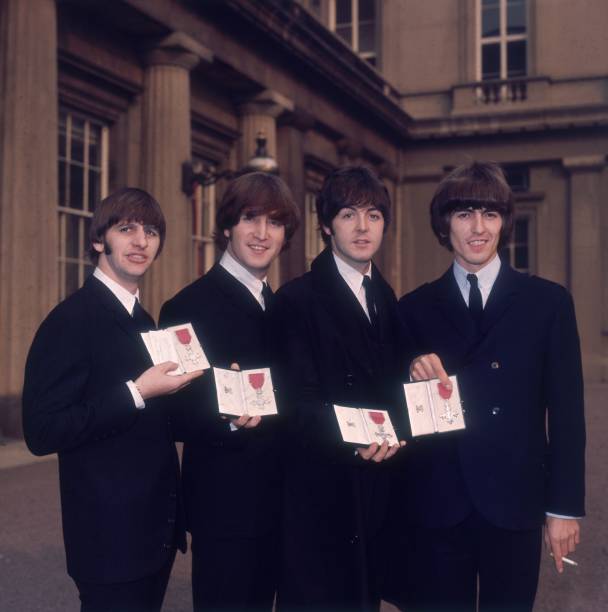
The deaths of John Lennon and George Harrison deepened that emotional connection further. For many fans, losing them felt strangely personal despite never having known them directly. Yet what continues resonating most strongly is not tragedy itself, but the enduring bond visible whenever McCartney and Starr speak about the others. Even decades later, conversations about John and George rarely sound like discussions about former coworkers or business partners. They sound like memories of family.
That emotional continuity explains why moments involving surviving Beatles members still generate extraordinary reactions worldwide. Whether audiences hear a new collaboration between Paul and Ringo, watch archival footage, or revisit old albums, the experience often feels less like revisiting history and more like reconnecting with something emotionally permanent.
And perhaps that is why debates about whether The Beatles remain “the most influential band in the world” ultimately feel almost secondary.
Because influence alone does not explain what people feel when the music starts playing.
What listeners respond to is something more difficult to measure:
the feeling that these songs somehow understand human life itself.
The Beatles were not simply four musicians who became famous.
They became part of the emotional memory of the modern world.