

In 2012, Carrie Underwood reached a milestone that would forever cement her status as one of the most influential voices in contemporary country music. Her album Blown Away didn’t just top the charts—it signaled a transformation, both for Underwood as an artist and for the genre itself. The album’s impact, measured not only in sales but in cultural resonance, remains a benchmark in her career more than a decade later.
At the time, country music fans watched as Blown Away soared to the No. 1 spot on the Billboard 200, a rare achievement for a female country artist. The album’s instant success showcased Underwood’s versatility, blending traditional country elements with contemporary production and emotionally charged storytelling. Songs like the title track, Blown Away, combined haunting narratives with powerful vocals, capturing the attention of listeners and critics alike. It was clear that Underwood was no longer merely a product of American Idol fame; she was a commanding presence in country music’s modern landscape.
Industry experts note that the album’s production choices reflected a maturation in Underwood’s artistry. Collaborating with veteran producers, she explored complex arrangements and dynamic instrumentation that added depth to her signature vocal style. The result was a cohesive collection of songs that were both commercially viable and artistically ambitious. Tracks such as Two Black Cadillacs and See You Again showcased Underwood’s ability to convey narrative through song, creating an immersive experience for listeners that went beyond standard radio fare.

For fans, Blown Away was more than a chart-topping album—it represented a cultural moment. Its success reinforced Underwood’s ability to connect with a wide audience, blending mainstream appeal with authentic country storytelling. Her performances, marked by soaring vocals and emotive stage presence, brought the songs to life in ways that highlighted her skill and passion. Concerts during this era often became celebrations of storytelling, as audiences were drawn into the complex emotions of love, loss, and resilience that defined the album.
The critical reception was equally affirming. Reviewers praised Underwood’s technical precision and the emotional weight she brought to each track. The album earned numerous nominations and awards, further solidifying her reputation as a leading figure in the genre. Industry publications emphasized that Blown Away wasn’t merely a commercial success but a benchmark for quality and creativity in country music. It demonstrated that female artists could command both critical acclaim and mainstream recognition, a notion that was especially significant in a genre historically dominated by male performers.
Beyond its artistic and commercial achievements, Blown Away also marked a period of personal growth for Underwood. In interviews, she described the album as an opportunity to explore new lyrical themes and musical textures, pushing herself beyond familiar territory. The confidence and artistic risk-taking evident in Blown Away would become hallmarks of her subsequent work, setting a standard for future albums and reinforcing her longevity in the music industry.

Fans continue to debate the album’s influence, not only within Underwood’s discography but across country music as a whole. Many consider Blown Away a turning point for the genre, blending traditional storytelling with contemporary soundscapes in ways that expanded the possibilities for country music in the 21st century. Its songs, still played widely on radio and streaming platforms, continue to resonate with both longtime fans and new listeners discovering Underwood’s catalog.
In retrospect, the album’s significance extends beyond its immediate commercial success. Blown Away exemplifies the potential for music to balance artistic ambition with audience engagement, proving that country music could evolve while remaining true to its roots. For Underwood, it was a declaration of artistic identity—a clear statement that she was committed to growth, excellence, and storytelling that touched listeners deeply.
Today, Carrie Underwood’s career reflects the enduring impact of Blown Away. The album remains a reference point in discussions of contemporary country music, often cited for its narrative strength, production quality, and vocal excellence. As Underwood continues to record, perform, and influence the genre, the legacy of Blown Away serves as a reminder of the pivotal moments that define an artist’s journey and shape the course of music history.
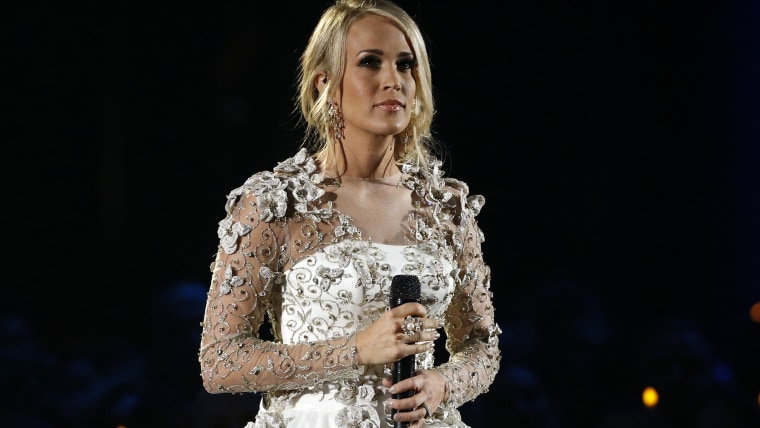
For anyone looking to understand the evolution of country music over the past decade, Blown Away offers a lens through which to appreciate the artistry, ambition, and cultural significance of Carrie Underwood. Its songs remain anthems, not only because of their commercial performance but because of the profound connection they forged with listeners—a connection that continues to echo in the hearts of fans around the world.