

The announcement that landed like a gut punch
Brad Arnold, the lead singer and founding member of 3 Doors Down, has died at 47 after a battle with stage IV kidney cancer, according to statements reported by major outlets and the band's public announcement.
For many fans, the shock wasn't just the headline—it was the sense of suddenness, even after months of public updates about his illness. Arnold's voice was a defining sound of early-2000s American rock: emotionally direct, unpolished in the best way, and built for the kind of lyrics people reach for when they don't have their own words.
In the hours after the news broke, social media filled with the same themes: disbelief, gratitude, and a particular kind of grief that comes when someone's music has been stitched into your life for so long that losing them feels personal.
A voice that carried "heartland" feeling, not just rock radio

3 Doors Down always lived in a space wider than genre labels. Yes, they were a rock band with massive radio success. But Arnold's delivery—plainspoken, aching, and earnest—connected with listeners who don't typically care about category lines. Songs like "Kryptonite," "Here Without You," and "When I'm Gone" weren't just hits; they became emotional markers for a generation.
That's why the reaction has traveled into country circles too. The language in Arnold's songwriting—loneliness, regret, loyalty, survival—shares DNA with country storytelling. He sang like someone who meant every syllable. He didn't need trends or gimmicks to sell the feeling.
For many, this wasn't "rock news." It was the loss of a heartland voice—someone whose music kept people company through the long miles: deployments, breakups, night shifts, hospital waiting rooms, and late drives when the world feels too heavy.
The illness he faced in public, and the faith he held onto
Arnold revealed in 2025 that he had been diagnosed with stage IV clear cell renal cell carcinoma that had spread to his lung, forcing the band to cancel touring plans.
In the months that followed, coverage frequently noted his emphasis on faith and gratitude even while undergoing treatment—an approach that resonated deeply with fans who saw him as both tough and tender, vulnerable without being performative.
His death, reported as peaceful and surrounded by loved ones, has only intensified that sense of intimacy: this wasn't a distant celebrity story. It was someone people felt they knew, because he sang the parts of their lives they didn't say out loud.
Why Blake Shelton fans are reacting so strongly
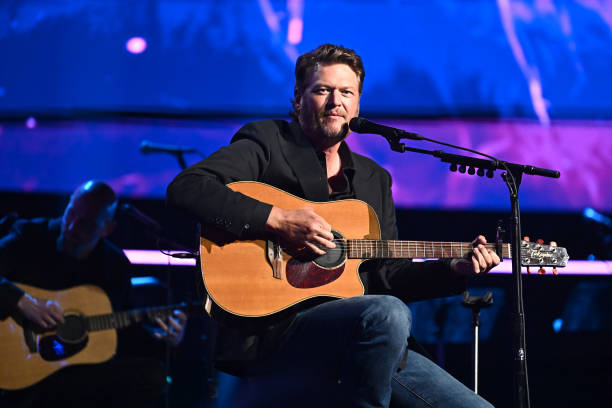
It might seem unexpected that Blake Shelton's fanbase would be pulled into mourning for a rock frontman. But the emotional overlap is real. Shelton's career has been built on something similar: songs that are accessible, direct, and rooted in everyday American feeling—music that doesn't posture as "cool," but aims to be true.
Country listeners understand what it means when a voice becomes a companion. They know how certain singers end up representing a time in your life so clearly that hearing them later is like reopening a sealed box of memories. Arnold held that role for millions.
In that sense, the grief being shared across genres makes perfect emotional sense. Different sounds. Same function: a voice that helps people survive their hardest seasons.
The legacy: a voice that doesn't disappear, it travels

Arnold leaves behind more than a catalog of hits. He leaves behind the thing fans keep describing in tributes today: a voice that sounded like honesty.
That matters because music is one of the few places where grief can be carried without explanation. A song can hold what a person can't. And when an artist dies, listeners don't just lose the possibility of "new music." They lose the comfort of knowing that voice is still out there—somewhere—still making new meaning.
But the recordings remain. And in the way people are sharing them now—across rock pages, country pages, veteran pages, hometown pages—Arnold's work is doing what it always did: traveling the backroads of American emotion and meeting people where they are.
Rest in peace, Brad Arnold.
Some voices don't disappear—they become part of the road.