

Long before Rocky Balboa became one of the most recognizable characters in American movies, Sylvester Stallone faced a problem that had nothing to do with boxing: Hollywood could see potential in his writing before it was convinced there was a leading man standing behind it.
By the mid-1970s, Stallone had spent years trying to establish himself as an actor. He had appeared in small roles and landed a significant part in The Lords of Flatbush, but he was still far from being a bankable star. His own biography describes a period of repeated auditions and limited success, while Stallone increasingly turned to writing as another route into the business.
That decision would eventually produce Rocky.
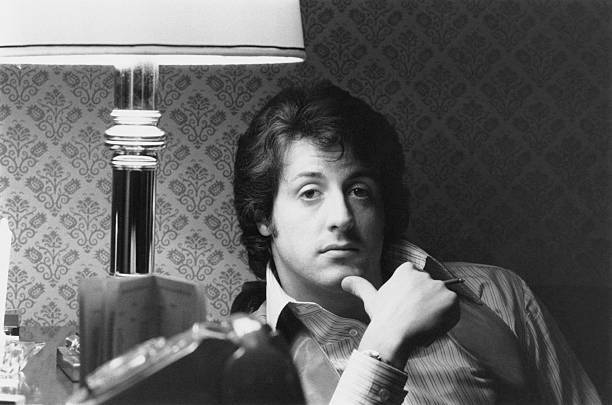
The screenplay grew out of Stallone’s fascination with the idea of an overlooked fighter receiving one improbable chance. The American Film Institute’s catalog says Stallone drew inspiration from the 1975 heavyweight title fight between Muhammad Ali and underdog Chuck Wepner. After thinking about the idea for months, he wrote a rough draft in roughly three and a half days and later revised it.
The result was not simply a boxing movie.
Rocky Balboa was a small-time Philadelphia fighter whose real victory was not necessarily beating the champion. It was proving that he belonged in the ring at all. That emotional premise would later help make the film universal. But before audiences could embrace Rocky, Stallone had to win a fight of his own over who would play him.
The script attracted interest. Stallone, however, attached a condition: he wanted the lead role.
That was a difficult proposition for a studio system built around recognizable names. According to the AFI catalog, United Artists and other companies showed interest in the screenplay, with offers reportedly reaching as high as $275,000 for the rights. Producers Irwin Winkler and Robert Chartoff were interested in making the film, but established actors including Ryan O’Neal, James Caan and Burt Reynolds were among the names discussed for Rocky.

For Stallone, selling the screenplay without playing the character would have solved one problem while creating another.
He would have been paid for his writing, but the part he believed could define him would belong to someone else.
So he held his position.
That choice has often been retold as a simple story of confidence: a struggling actor believes in himself, refuses a large check and proves Hollywood wrong. The reality was more complicated. Stallone did not know that Rocky would become a landmark film. There was no guarantee that insisting on the role would lead to anything. He was protecting an opportunity that could just as easily have disappeared.
What made the decision unusual was that Stallone was not defending an established career.
He was betting on one he did not yet have.
Winkler and Chartoff ultimately backed a version of the project that kept Stallone in the title role and held the production to a modest budget. AFI records show that the producers agreed to make the film for about $1 million, helping preserve their control over the project and Stallone’s place at its center.
The limitations became part of Rocky’s character.
Directed by John G. Avildsen, the movie lacked the scale of a major studio spectacle. Instead, it focused on streets, gyms, apartments and faces. Philadelphia looked lived-in rather than polished. Rocky himself did not resemble an invincible movie hero. He was awkward, bruised, uncertain and painfully aware that his chance might never come again.
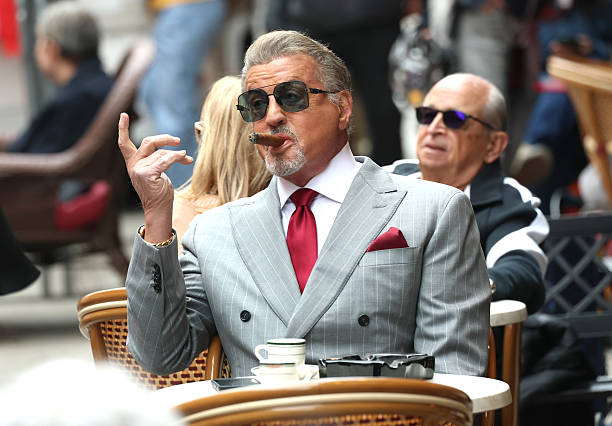
Audiences responded.
Released in 1976, Rocky became a major commercial success and an awards phenomenon. At the 1977 Academy Awards, the film received nine nominations and won three Oscars, including Best Picture and Best Director. Stallone was nominated both for his performance as Rocky and for his original screenplay.
In a matter of months, the actor studios had hesitated to place at the center of the film became inseparable from the character.
That is what makes the story more interesting than a familiar tale about refusing to quit.
Stallone’s crucial decision was not simply persistence. It was understanding the difference between being paid for an opportunity and controlling what that opportunity could become.
Had he sold Rocky under different terms, the screenplay still might have become a movie. Someone else might have climbed the Philadelphia Museum of Art steps. Someone else might have stood across the ring from Apollo Creed.
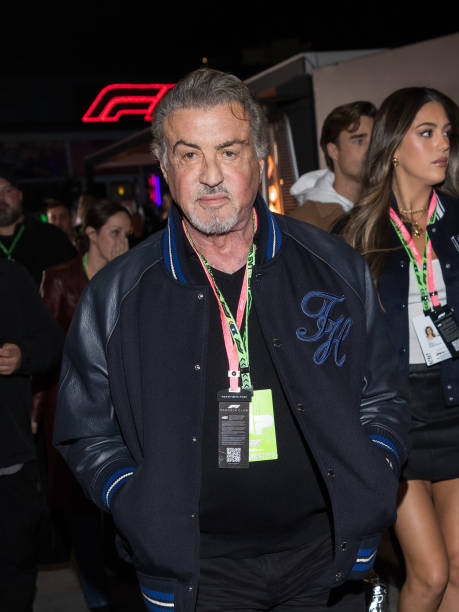
Instead, Stallone made a risky demand at the moment when he had the least leverage.
Hollywood wanted Rocky.
Stallone’s gamble was making sure that when audiences finally met him, they met Sylvester Stallone, too.


