

A Teenage Glance That Changed Two Lives
Long before the honorific “King of Country,” George Strait was simply a soft-spoken sophomore at Pearsall High School in rural Texas. Life felt predictable until the morning he noticed Norma Strait drifting down the hallway, a spiral notebook clutched to her chest. Friends later joked that George learned more algebra by sitting one desk away from Norma than from any textbook. Borrowed pencils became cafeteria milkshakes; weekend drives along dusty farm roads turned into the unspoken first verse of a lifelong duet.
Eloping Under a Mexican Sun

By late 1971 the draft board loomed, and George—facing deployment during the Vietnam War—worried that distance might unravel what neither dared call destiny. He offered Norma a simple solution: “Wherever I go, I want you there too.” On December 4 1971 they crossed into Mexico, found a tiny chapel in Valle Hermoso, and exchanged vows with a janitor as witness. No photographer, no banquet—just two teenagers, a pocketful of hope, and a promise louder than the church bell that never rang. They phoned their parents only after returning to Texas, wedding bands already warming their fingers.
Honeymoon in Army Khakis
Instead of a beach resort, the newlyweds unpacked in a cinder-block apartment at Schofield Barracks, Hawaiʻi. Private Strait earned barely enough for instant coffee and canned chili, while Norma stitched patches onto fatigues. Music filled the empty evenings: George practiced three-chord progressions on a pawn-shop guitar, drowning out ceiling-fan buzz. Money stayed scarce but laughter was free—Friday meant 35-cent tacos in Waikīkī and handwritten letters home insisting each was “doing just fine.” Those lean, khaki-colored months carved habits that would outlive fame: frugality, teamwork, and the refusal to end a day angry.
Building Dreams One Honky-Tonk at a Time
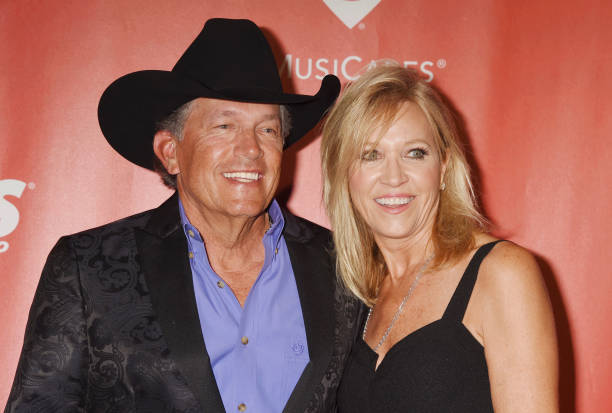
Discharged in 1975, the couple—now joined by infant daughter Jenifer Strait—drove back to Texas with second-hand furniture and first-rate ambition. George formed the Ace in the Hole Band, hauling amplifiers across beer-sticky dance floors for fifty dollars and free enchiladas. Norma sold raffle tickets, sewed rhinestones onto his shirts, and packed bologna sandwiches for post-show drives that rarely ended before dawn. Nashville executives dismissed George’s traditional baritone as “yesterday’s sound,” but Norma urged him to stay the course. In 1981, after countless rejections, MCA Records finally offered a single-song deal for “Unwound.” The track thundered onto country radio, and the Straits celebrated by splitting a Whataburger and filling the truck—still on a budget.
The Shattering Night of 1986
Fame gathered speed, but tragedy waited at a crossroads. On June 25 1986, 13-year-old Jenifer died in a car accident outside San Marcos. Reporters camped on the curb, cameras poised for grief, but George met sorrow with silence, retreating behind drawn shades. For months the stage lights stayed dark, guitars dusty. When touring resumed, he wore Jenifer’s silver charm bracelet hidden beneath his cuff—a private relic against public glare. Fans who noticed never spoke; they simply cheered louder when he reached the notes she once sang from the back seat.
Turning Grief Into Purpose
Rather than let loss calcify, the couple founded the Jenifer Lynn Strait Foundation, channeling concert proceeds into children’s charities across Texas. They seldom advertised donations, preferring quiet impact to headline philanthropy. “If a kid smiles,” George later said, “that’s her shining through.” The mission braided them tighter: Norma handled correspondence, while George shouldered a growing tour schedule, each encore a silent thank-you for the daughter who no longer waited backstage.
“I Cross My Heart”—Private Vow, Public Hit

In 1992, while filming Pure Country, producers needed a climactic ballad. George opened a worn notebook and revisited the six words he’d spoken in Mexico: I cross my heart and promise… Co-writer Steve Dorff recalled the song flowed “as if rehearsed for decades.” At its Houston Astrodome debut, 60,000 fans waved lighters, yet George’s gaze fixed on Norma beside the soundboard, mouthing each lyric like a wedding vow set to steel guitar. The track soared to No. 1, but insiders knew it was never aimed at radio; it was a love letter accidentally broadcast nationwide.
Ranch Mornings and Quiet Rituals
Despite record-breaking tours—including the highest-grossing single-artist show in U.S. history—the Straits always retreated to their ranch near San Antonio when wheels stopped spinning. Sunrise found George mending fences while Norma checked newborn calves with a thermos of Community coffee. They bickered over whose turn it was to cook eggs, competed to solve Jeopardy! clues before the host finished reading, and hosted barbecues where neighbors sometimes forgot they were dining beside a multimillion-selling legend. Their favorite date night remains a shared bowl of Blue Bell ice cream and an old western on TV—subtitles on, volume low enough to hear the crickets.
Milestones, Medals, and the Metric That Matters

Industry statistics still stun: 60 chart-toppers, 13 multi-platinum albums, a Country Music Hall of Fame induction, and a record for most CMA wins by a single artist. Yet when interviewers ask George to name his proudest achievement, he rarely cites sales figures. Instead, he points to December 4 1971—the day two teenagers decided forever was worth the leap. Their union has outlasted fads, fallout, and heartbreaks—proof that platinum plaques may glisten, but brushed-nickel wedding rings bear a richer polish when worn daily for half a century.
What Their Story Teaches About Forever
The Strait narrative refuses tidy fairy-tale clichés. Forever, they insist, is built morning by ordinary morning: scooping coffee grounds at 5 a.m.; forgiving missed anniversaries because a daughter’s memorial date felt heavier; choosing conversation over silence even when nerves fray. During a Dallas stadium show in April 2026, George closed with “I Cross My Heart,” then escorted Norma down the ramp, fingers interlaced like teenagers sneaking out of algebra class. The jumbotron zoomed in on two wedding bands—dulled slightly by time yet blazing beneath floodlights. If country music rests on three chords and the truth, the Straits remind us that the deepest truth is sometimes a simple promise kept—day after ordinary day—for fifty-five extraordinary years.


