

The lights may belong to Carrie Underwood, but anyone who has experienced one of her concerts knows the audience has a voice of its own.
From the first note to the final encore, her fans have turned arenas, theaters and outdoor festivals into something larger than a concert. They sing every word, raise their voices between songs and respond to Underwood with the kind of energy that can make a performer pause and simply take it all in.
That connection has become one of the defining features of Underwood’s career.
Her live schedule has taken her across the United States and beyond, from major arenas and festivals to intimate appearances at the Grand Ole Opry. Her official tour history includes performances at venues such as Madison Square Garden, Bridgestone Arena, the MGM Grand Garden Arena and the Grand Ole Opry House.
But behind every date on a tour calendar is something that cannot be measured by ticket sales: the people who showed up because her music meant something to them.
For some, the experience begins long before the house lights go down.
Fans arrive wearing concert shirts, carrying handmade signs and talking about the songs they hope to hear. Some have followed Underwood since her breakthrough on American Idol. Others discovered her music years later through songs that became part of their own lives.
Then the lights dim.
The first reaction is almost instinctive.
A roar rises through the room.
And when Underwood appears, thousands of individual voices suddenly become one.
That is the remarkable thing about a great concert audience. The performer may be the reason everyone bought a ticket, but the crowd becomes part of the performance itself.
Underwood has spent nearly two decades building a catalog that invites that kind of participation. Her powerful vocals and emotionally direct songs give fans plenty to sing back, from triumphant anthems to songs carrying a much quieter emotional weight.
The result can be almost cinematic.
A single lyric begins.
One section of the audience sings it.
Then another joins.
Within seconds, Underwood is no longer carrying the entire song alone.
The fans are carrying it with her.
That exchange is especially meaningful for an artist whose performances demand tremendous vocal power. Underwood has built a reputation for technically demanding live shows, and fans have frequently described her concerts as high-energy experiences where the singer’s voice remains the central attraction.
Yet the most memorable moments are not necessarily the biggest vocal moments.
Sometimes they happen when Underwood stops singing.
The music fades.
The crowd keeps going.
For a performer, there may be few better signs of connection than hearing thousands of people continue a song without being asked.
It is a reminder that the music has left the stage.
It now belongs to the people who have carried it with them.
That relationship was visible again in 2026, when Underwood’s official fan club celebrated its annual gathering at the Grand Ole Opry House. The event brought fans together with the singer in Nashville and reflected the unusually organized community that has developed around her career.
Her connection with fans has also continued through her evolving career. In June 2026, Underwood celebrated the 19th annual official fan club party while marking the third anniversary of her SiriusXM channel, Carrie’s Country, and the 20th anniversary of “Before He Cheats.”
Those milestones reveal something important.
A career lasting this long is not sustained by one hit song or one spectacular performance.
It is sustained by people who continue to care.
Fans who return year after year.
Fans who bring their children to shows.
Fans who remember where they were when they first heard a particular song.
Fans who can sing an entire chorus before the artist even reaches the microphone.
And perhaps that is why the final moments of an Underwood concert can feel so emotional.
After the final major song, the crowd knows what is coming.
The lights may begin to change.
The musicians may take their final bows.
Underwood may disappear backstage.
But the audience isn’t ready to leave.
The chants begin.
The applause grows louder.
Thousands of people call her name.
Then, perhaps, the lights fall again.
A familiar opening begins.
And the artist returns for one more song.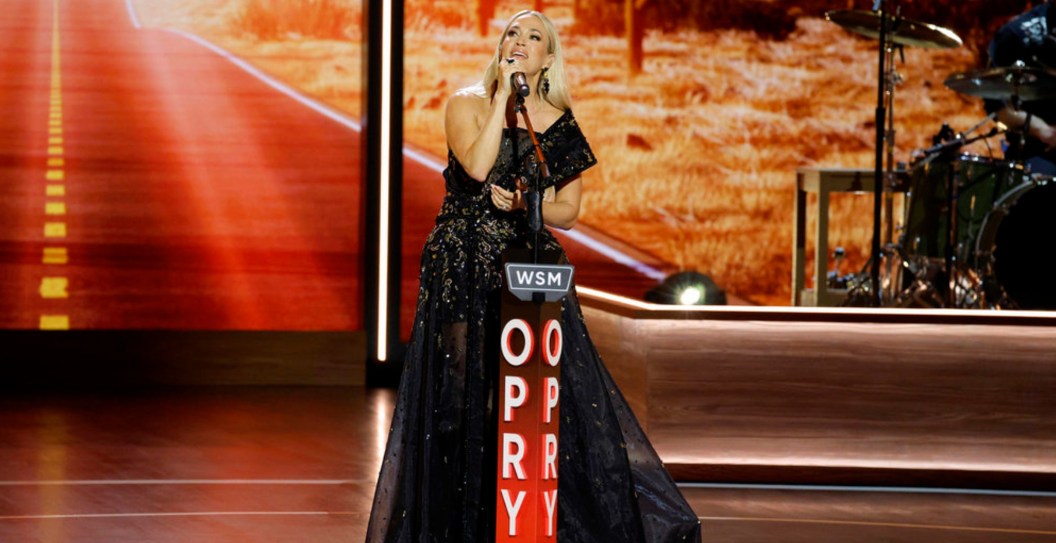
The encore becomes more than an encore. It becomes a conversation between performer and audience — a final exchange of gratitude before everyone returns to the ordinary world outside the venue.
For Carrie Underwood, that relationship with her fans is one of the most enduring parts of her story.
The stages will change.
The songs will evolve.
The costumes and productions will become different.
But the essential moment remains the same: one singer standing in front of thousands of people, and thousands of people singing back.
That is what makes a great concert unforgettable.
Not simply the lights.
Not the size of the venue.
Not even the biggest note of the night.
It is the feeling that, for a few hours, everyone in the room belongs to the same story.
And when Carrie Underwood takes her final bow, the applause may not simply be for the performance they have just witnessed.
It may be for every memory her music helped create.
From the front row to the final encore, her fans have always had a way of giving something back.
**She gives them the songs.
They give her their voices.**


