
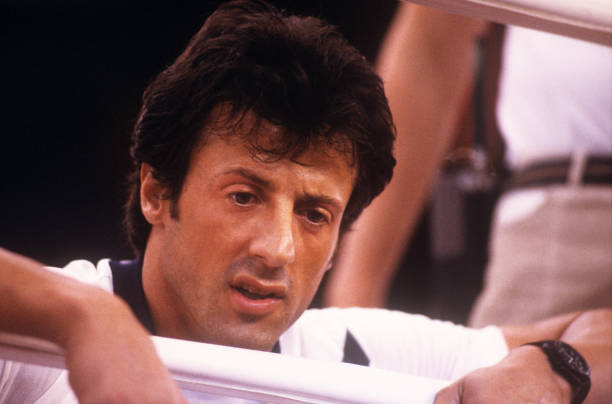
Sylvester Stallone was not a Hollywood superstar when Rocky entered his life.
He was an actor still searching for the role that might finally convince the industry to see him differently.
Before Rocky, his most significant leading role had come in the low-budget 1974 film The Lords of Flatbush. It gave Stallone valuable experience, but it did not suddenly make him the kind of name studios trusted to carry a major motion picture.
So Stallone kept acting.
And he kept writing.
That second skill would eventually become his way around a problem he could not solve through auditions alone.
In 1975, Stallone watched heavyweight champion Muhammad Ali fight Chuck Wepner, a huge underdog who stayed in the fight far longer than most people expected.
The bout stayed with him.
According to the American Film Institute’s production history, Stallone later said the fight made him think about frustrated ambition and broken dreams. After considering the idea for months, he wrote a rough first draft of Rocky in roughly three and a half days, then continued revising it.
The character at the center of the screenplay was Rocky Balboa.
Rocky was not a champion.
He was not wealthy.
He was not even expected to win.
He was a small-time Philadelphia fighter suddenly given the chance to stand across the ring from the heavyweight champion of the world.
For Stallone, the story carried an obvious emotional truth.
Rocky wanted one chance to prove that he belonged.
So did the man who wrote him.
Then something happened that Stallone had spent years waiting for.
Hollywood became interested.
United Artists and other companies saw value in the screenplay. According to AFI, offers for the rights reportedly reached as high as $275,000 — a substantial sum for an actor and writer who had not yet achieved major success.
It could have been the breakthrough.
There was only one problem.
Stallone did not want to sell Rocky and disappear.
He wanted to play Rocky himself.
That changed the conversation completely.
The industry could understand buying an interesting screenplay.
Building the film around Stallone was another matter.
He did not yet have the box-office record that would normally make a studio comfortable placing an entire movie on his shoulders.
Producer Irwin Winkler later recalled that he and his partner Robert Chartoff pushed for Stallone, while United Artists wanted a more established performer. Ryan O’Neal, James Caan and Burt Reynolds were among the names discussed, and Robert Redford was also considered.
From a studio perspective, the logic was straightforward.
The script had potential.
A proven star could reduce the risk.
But Stallone saw the situation differently.
If someone else played Rocky, he might receive money and a screenwriting credit.
But he would lose the role he had effectively created for himself.
So he refused to separate the screenplay from his demand to play the lead.
That decision sounds almost inevitable today because everyone already knows the ending.
In 1975, it was anything but inevitable.
Stallone had no guarantee another buyer would appear.
He had no guarantee the movie would actually be made.
He had no guarantee audiences would accept him.
And he had no way of knowing that Rocky Balboa would remain attached to his name for decades.
He was not protecting a proven franchise.
He was protecting a possibility.
Winkler and Chartoff eventually found a way to make the gamble work.
Their deal with United Artists gave them the ability to make a film of their choice within a certain budget range. After negotiations over control and financing, they agreed to make Rocky for approximately $1 million and guarantee completion of the picture.
That arrangement allowed them to retain control and keep Stallone in the starring role.
The victory came with a price.
Rocky would not be made like an expensive studio spectacle.
Director John G. Avildsen was hired in part because of his ability to control costs, and he was given a 28-day production schedule.
The limitations affected almost every part of the film.
Stallone and Carl Weathers spent weeks rehearsing the climactic fight before principal photography. Stallone also trained for months with boxing adviser Jimmy Gambina to make Rocky physically believable.
Even one of the film’s quietest scenes was shaped by the budget.
Rocky was originally supposed to take Adrian to a busy ice-skating rink.
Hiring enough extras would have cost money the production did not have.
So the scene was changed.
The rink would be closed.
Rocky would walk beside Adrian while she skated almost alone.
A financial limitation became one of the film’s most intimate moments.
That pattern defined much of Rocky.
The movie did not have unlimited money.
It had character.
It had Philadelphia streets, cramped apartments, old gyms and a fighter who understood that winning was not always the same thing as victory.
In the film’s most important emotional moment, Rocky realizes that defeating Apollo Creed may be impossible.
What matters is going the distance.
That idea also described Stallone’s position before the film was made.
He did not need Hollywood to guarantee he would become a star.
He needed the chance to get into the ring.
When Rocky reached audiences in 1976, that chance changed everything.
The film earned nine Academy Award nominations and won three Oscars, including Best Picture, Best Director for John G. Avildsen and Best Film Editing.
Stallone himself was nominated for Best Actor and for his original screenplay. The Academy notes that he became only the third person at that point in Oscar history to receive acting and screenwriting nominations in the same year.
The actor the studio had hesitated to place at the center of the movie was suddenly inseparable from it.
Rocky Balboa became more than a successful role.
He became the foundation of Stallone’s career.
Sequels followed.
Then came Rambo.
Then decades of action films, reinvention, setbacks and returns.
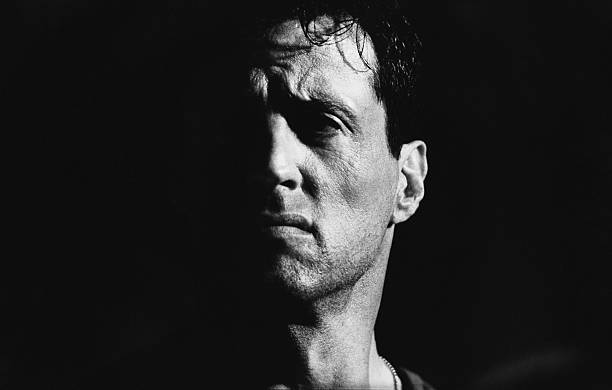
But the crucial decision came before any of that existed.
Stallone had something Hollywood wanted.
For once, the question was not whether anyone would give him an opportunity.
The opportunity was already sitting in front of him.
The question was what he was willing to give up to take it.
He could have accepted the money.
He could have allowed a more established star to wear the gloves.
He could have remained the writer whose character made someone else famous.
Instead, he insisted on stepping into the ring himself.
That choice could easily have cost him the movie.
Instead, it gave him a career.
And decades later, the most fascinating question may still be the simplest one:
What would Sylvester Stallone’s life have looked like if he had taken the money — and let someone else become Rocky?