

Before Chris Stapleton became one of the most celebrated voices in modern country music, he was simply a songwriter trying to find his place in Nashville.
There was no guarantee that the wider world would ever know his name.
There was only the music.
The years of writing.
The small stages.
The bands.
The uncertainty.
And the stubborn belief that a good song was worth writing even when nobody was promising a reward.
That early chapter is essential to understanding the artist Stapleton eventually became.
When Traveller arrived in 2015, audiences reacted as though a new star had suddenly appeared.
But Stapleton was not new.
He had spent years building his reputation inside Nashville’s songwriting community and performing with groups including the SteelDrivers and the Jompson Brothers.
He had written songs recorded by other artists.
He had learned how to perform.
He had learned how to listen.
Most importantly, he had learned how to tell a story.
Then the spotlight finally found him.
Traveller became a breakthrough that changed the trajectory of his career. The album introduced millions of listeners to a voice that sounded unlike the polished country sound they had become accustomed to hearing.
There was grit.
There was soul.
There was vulnerability.
And there was an unmistakable sense that these songs came from somewhere real.
That authenticity became one of Stapleton’s greatest strengths.
He did not need to manufacture a complicated public persona.
The music already said enough.
Songs such as “Traveller,” “Fire Away” and “Tennessee Whiskey” demonstrated different sides of his artistry, while later releases such as “Broken Halos” and “Starting Over” expanded his emotional vocabulary.
Loss.
Love.
Regret.
Hope.
Rebuilding.
These themes are universal, but Stapleton’s voice makes them feel intensely personal.
That is why his music has connected with listeners far beyond traditional country audiences.
A person who has never considered themselves a country fan can hear Stapleton sing and recognize something familiar.
The blues influence is there.
The Southern soul is there.
The rock elements are there.
But at the center is country music’s oldest strength: storytelling.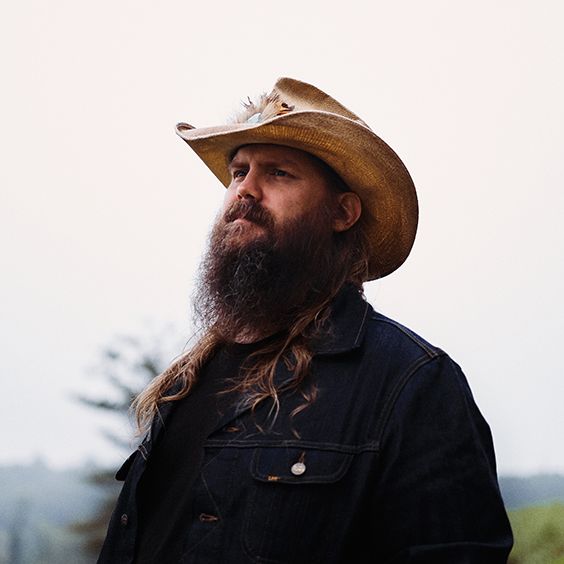
And Stapleton understands that storytelling does not require exaggeration.
Sometimes the quietest line carries the most weight.
Sometimes a simple guitar arrangement allows the emotion to become more powerful.
Sometimes the best performance is the one that leaves enough space for the listener to bring their own memories into the song.
That approach has become especially apparent in Stapleton’s live performances.
He has performed on some of the largest stages in the world, yet the central focus often remains remarkably simple.
A guitar.
A band.
A microphone.
A voice.
Then thousands of people begin singing.
The effect can be extraordinary.
The audience may arrive expecting a concert, but the experience can become something closer to a shared memory.
Every listener brings a different story.
Someone may connect “Starting Over” to a new beginning.
Another may hear “Broken Halos” while remembering someone they have lost.
Someone else may simply hear a great song and feel understood for a few minutes.
That is the power of a lasting catalog.
The artist creates the song.
The audience gives it a second life.
Stapleton’s career also offers an important lesson about resilience.
His success did not arrive immediately.
He spent years working in an industry where recognition can be unpredictable.
There were undoubtedly moments when the easiest choice might have been to stop chasing the dream.
Instead, he kept writing.
He kept performing.
He kept developing.
When success finally arrived, he was prepared.
That is why describing him simply as an overnight sensation misses the larger story.
The world discovered Chris Stapleton in 2015.
Nashville had been watching him for years.
And the difference between those two timelines matters.
The years before fame became the foundation for everything that followed.
They taught him patience.
They taught him musicianship.
They taught him that a career is not built from one great night.
It is built from thousands of ordinary days.
That philosophy has remained visible even after Stapleton reached the highest levels of the industry.
Awards and major stages have not replaced the songwriting.
Success has not erased the musician.
And fame has not made the songs less human.
That may be the most compelling part of his legacy.
Chris Stapleton’s story is not really about becoming famous.
It is about becoming ready.
By the time millions of listeners heard his voice, he had already spent years learning how to use it.
He had already experienced the uncertainty that comes with pursuing a creative life.
He had already watched other artists succeed with songs he helped create.
And he had already learned that recognition does not always arrive on schedule.
Then, when the moment came, he had something genuine to offer.
That authenticity continues to define his career.
As country music evolves, Stapleton remains connected to its roots while pushing its boundaries.
He has helped remind a new generation that country music can embrace blues, soul and rock without losing its emotional core.
He has also shown that powerful singing does not have to mean unnecessary excess.
Sometimes one honest voice is enough.
The idea of a definitive documentary about his life would therefore be about much more than awards and hit records.
It would be about the years nobody saw.
The songwriter before the superstar.
The musician before the celebrity.
The uncertainty before the breakthrough.
And the people and experiences that shaped the songs.
Because behind every powerful performance is a history.
Behind every lyric is a story.
And behind every successful artist are years of work that the audience rarely gets to see.
Chris Stapleton’s legacy is still being written, but one thing has already become clear.
He did not simply become famous.
He built a body of work that people have carried into their own lives.
And that is what makes a musical legacy last.
The spotlight may have introduced Chris Stapleton to the world, but it was the songs — built through years of patience, struggle, and honesty — that made the world stay and listen.


