

There are songs you listen to because you enjoy them.
And then there are songs you return to because life has changed the meaning of them.
Chris Stapleton has become that kind of artist for millions of listeners.
His music can appear unexpectedly during a long drive, in the quiet hours after midnight, or at the exact moment when a memory suddenly becomes heavier than expected.
A familiar guitar line begins.
His voice enters.
And somehow, the room feels different.
Stapleton’s career may be firmly rooted in modern country music, but his appeal comes from something much older: the belief that a song should tell the truth.
Before the awards and sold-out arenas, there were years of work that most casual listeners never saw.
Stapleton spent much of his early career writing songs, performing with bands and developing his identity as a musician in Nashville. He was respected within the industry long before he became a household name.
That long apprenticeship became important when his solo career finally broke through.
His 2015 album, Traveller, introduced millions of people to an artist who sounded remarkably unconcerned with following whatever musical formula happened to be popular.
The record was rooted in country, but its influences reached into blues, rock and Southern soul.
At the center was Stapleton’s voice.
Rough when it needed to be.
Tender when the song demanded it.
Powerful without constantly needing to demonstrate its power.
That combination became his signature.
When Stapleton appeared alongside Justin Timberlake at the 2015 CMA Awards, the performance became one of the night’s defining moments.
For many viewers, it was their first real introduction to him.
But there was no overnight transformation behind the scenes.
Stapleton had already spent years learning how to write, arrange and perform.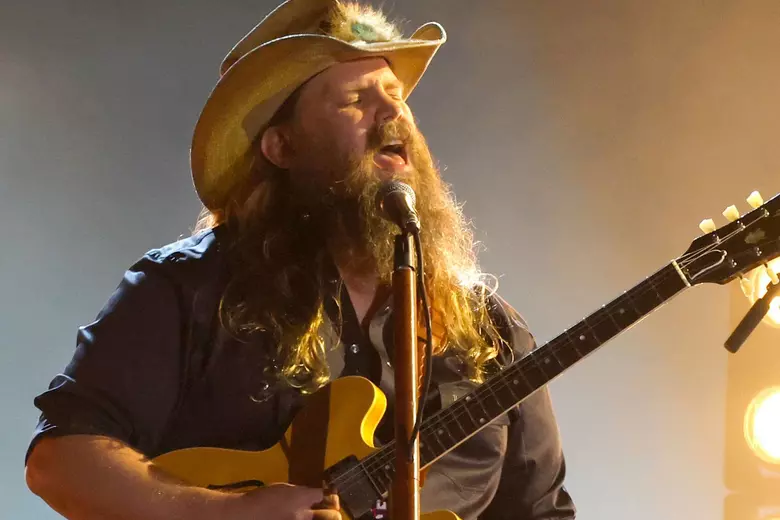
The spotlight simply arrived after the foundation had already been built.
That distinction helps explain why his music continues to resonate.
He isn’t singing from the perspective of someone who discovered country music yesterday.
He is carrying decades of musical influences into the present.
His songs frequently explore subjects that never become outdated: love, regret, grief, redemption, loneliness and the possibility of beginning again.
Those themes are simple.
But simple does not mean easy.
A great songwriter can take an ordinary human experience and make it feel newly understood.
Stapleton has repeatedly done that.
Consider “Starting Over.”
On the surface, it is a song about beginning again.
But almost anyone can bring their own meaning to that idea.
For one listener, starting over might mean leaving a relationship.
For another, it might mean rebuilding a career.
For someone else, it might simply mean getting through another difficult morning.
The song doesn’t dictate the answer.
It leaves room for the listener.
That may be one of Stapleton’s greatest strengths.
He doesn’t always tell people what to feel.
He creates enough emotional space for them to discover it themselves.
“Broken Halos” carries a different kind of weight.
Its themes of loss and mortality have made it particularly meaningful to listeners who have experienced grief.
The song doesn’t attempt to make sadness disappear.
Instead, it acknowledges that some people remain part of our lives through memory long after they are gone.
That is a distinctly country idea.
For generations, country music has served as a place where people could bring their private pain into the open.
A heartbreak could become a song.
A lost friend could become a verse.
A difficult childhood could become a story.
A broken relationship could become something thousands of strangers suddenly understood.
Stapleton belongs to that tradition.
But he also gives it a contemporary sound.
His music doesn’t feel like an imitation of the past.
It feels like a continuation of it.
That distinction has helped him reach listeners who may not have grown up listening to traditional country music.
A younger fan can hear the blues influence.
A longtime country listener can recognize the storytelling.
A rock fan can hear the guitars.
A soul listener can hear the emotion in his phrasing.
Somehow, all of those influences coexist without overwhelming the songs.
That ability to connect different musical worlds is part of Stapleton’s importance.
He has helped demonstrate that country music can expand without forgetting where it came from.
And perhaps that is why his songs continue to find people in quiet moments.
A stadium performance may be unforgettable.
An awards-show appearance may become part of music history.
But the most meaningful relationship between an artist and a listener often happens somewhere nobody else can see.
A person sitting alone.
A song playing softly.
A memory returning.
Those are the moments when music becomes personal.
Stapleton’s voice has a quality that makes that intimacy possible.
Even when he is singing to thousands of people, there is often a sense that the performance could work just as well in a small room with only a guitar.
That is not easy to achieve.
It requires trust.
Trust in the song.
Trust in the audience.
And trust that emotion doesn’t need to be exaggerated to be powerful.
In an era when entertainment is increasingly visual, that restraint feels almost radical.
Stapleton doesn’t need every performance to become a spectacle.
Sometimes the song is enough.
Sometimes the voice is enough.
Sometimes the silence between two lines says more than another layer of production ever could.
That is why his music may ultimately outlive individual moments of fame.
Trends change.
Radio formats evolve.
Artists come and go.
But people will always need songs for certain moments.
They will need a song when they miss someone.
A song when they are falling in love.
A song when they are trying to forgive.
A song when they are driving home after making a difficult decision.
A song when they don’t know what comes next.
That is where artists like Stapleton become more than entertainers.
They become part of people’s emotional histories.
Years from now, a listener may hear the opening of one of his songs and immediately remember a particular person, a particular road or a particular period of life.
The recording will be exactly the same.
But the listener will not be.
And that is the secret of enduring music.
It grows with you.
Chris Stapleton’s career is still being written, but the evidence of his lasting impact is already there.
He has shown that a voice doesn’t have to be perfect to be unforgettable.
A song doesn’t have to be complicated to be profound.
And an artist doesn’t have to chase every trend to remain relevant.
Sometimes, you simply tell the truth well enough that people carry it with them.
Then, years later, when the world becomes quiet and a memory comes knocking, the song is still there.
Not demanding attention. Not asking to be remembered. Just waiting for the exact moment when you need it.


