

New York, New York — February 1964
On a cold Sunday evening in February, millions of American families gathered in living rooms across the country, settling into couches and armchairs as they did every week to watch The Ed Sullivan Show. It was a familiar ritual — a variety program known for comedians, Broadway acts, and family-friendly performances. But on February 9, 1964, something extraordinary was about to happen.
That night, four young musicians from Liverpool walked onto the stage of Studio 50. Within minutes, American popular culture would never be the same.
More than seventy million viewers tuned in to watch The Beatles perform. At the time, it was one of the largest television audiences in history. The moment John Lennon, Paul McCartney, George Harrison, and Ringo Starr appeared under the studio lights, the audience erupted. Teenage fans screamed so loudly that their voices nearly drowned out the music.

For many Americans watching at home, it was their first real encounter with the band that had already taken Britain by storm.
The Beatles had arrived in the United States just two days earlier. Their landing at New York's John F. Kennedy Airport had already drawn thousands of fans and reporters, a chaotic scene that hinted at the frenzy to come. Yet even that reception could not prepare the country for what would unfold on national television.
When Ed Sullivan introduced them that night, his words were simple and measured, as if he knew the moment would speak for itself.
"Ladies and gentlemen," he said, "The Beatles."
What followed felt less like a performance and more like an explosion of energy that spilled from the stage into living rooms across America. The band launched into "All My Loving," their harmonies tight, their haircuts unmistakable, their confidence undeniable. Cameras moved quickly between close-ups of the musicians and shots of the studio audience — rows of teenagers clutching their faces, crying, screaming, laughing.

Parents watched with a mixture of curiosity and disbelief.
For the teenagers in that room, the experience felt electric. For the millions watching at home, it felt like witnessing the birth of something entirely new.
The moment was particularly striking because it arrived during a fragile time in American history. Just months earlier, the nation had been shaken by the assassination of President John F. Kennedy. The country was still grieving, still uncertain. Into that atmosphere stepped four young musicians bringing humor, charisma, and a joyful kind of rebellion.
In interviews that weekend, The Beatles appeared relaxed and playful, joking with reporters and answering questions with quick wit. Their charm helped disarm critics who initially dismissed them as another passing pop fad.
But once the music started, skepticism quickly gave way to fascination.
Songs like "She Loves You" and "I Want to Hold Your Hand" sounded different from anything dominating American radio at the time. Their melodies were sharp and infectious, driven by tight guitar rhythms and vocal harmonies that felt both polished and spontaneous. The performance carried a raw energy that seemed to leap through the television screen.
Almost immediately, the cultural shift became visible.
The next day at schools across the country, students talked about little else. Record stores reported overwhelming demand for Beatles albums. Radio stations began playing their songs constantly. Within weeks, the band would dominate the Billboard charts in a way no artist ever had before.
The phenomenon soon earned a name: Beatlemania.
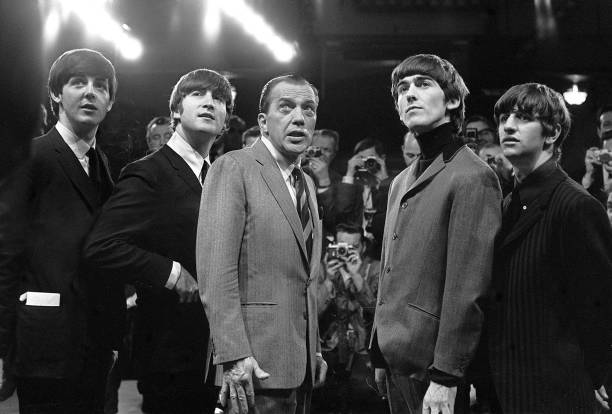
Yet the significance of that February night extended beyond screaming fans and chart records. The Beatles represented a new generation of musicians who wrote their own songs, shaped their own sound, and approached popular music with a creative ambition that blurred the line between pop and art.
Their appearance on The Ed Sullivan Show did more than introduce a band to American audiences. It opened the door for a cultural transformation that would ripple through the rest of the decade.
In the years that followed, music would become a powerful voice for youth culture, social change, and artistic experimentation. Countless bands would trace their inspiration back to that single broadcast.
But on that Sunday night in 1964, none of that history had been written yet.
There were only four young musicians standing under bright television lights, guitars in hand, smiling as the crowd roared around them.
And seventy-three million Americans watching as a new era began. 🎶