

For more than three decades, Garth Brooks has been one of the most powerful forces in American music. His record-breaking sales, stadium-filling tours, and genre-defying sound reshaped country music and pushed it into the global mainstream. But to measure Brooks' influence solely by charts, trophies, or ticket numbers is to miss the deeper story. His true impact reaches far beyond music—into culture, philanthropy, leadership, and the way artists understand their responsibility to the people who follow them.
At the height of his fame in the 1990s, Brooks didn't just sell albums; he redefined scale. He treated country shows like rock spectacles, bringing theatrical lighting, emotional storytelling, and an all-in physical performance to stages that had never seen it before. In doing so, he changed expectations for live entertainment across genres. Artists who came after him—country, pop, and rock alike—absorbed the lesson that authenticity and ambition could coexist. You didn't have to dilute your roots to dream bigger.
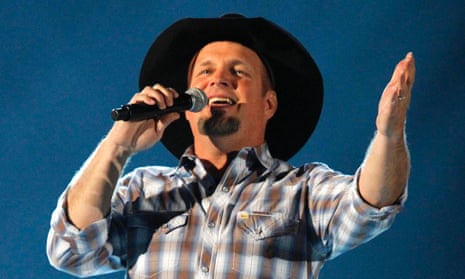
Yet Brooks' influence deepened when he made choices that ran against industry logic. In 2001, at the peak of his commercial power, he stepped away from the spotlight to focus on being a father. In an industry that rewards constant visibility, the decision was radical. It quietly reframed success for a generation of artists, suggesting that personal values could matter more than momentum. Years later, when conversations about work-life balance became central in creative industries, Brooks had already lived the answer.
His relationship with fans further illustrates why his reach extends beyond music. Brooks has consistently treated audiences not as consumers, but as partners in a shared experience. His concerts are famous for emotional openness—moments when tens of thousands of people feel seen, heard, and included. This sense of mutual respect has fostered an unusually loyal fan base, one that spans generations. Parents bring children. Children grow up and bring their own families. That continuity is cultural, not commercial.
Philanthropy is another pillar of Brooks' broader influence. Alongside his wife, Trisha Yearwood, he has supported disaster relief efforts, hunger initiatives, and housing projects through organizations like Habitat for Humanity. What sets Brooks apart is not just the size of his contributions, but his visibility in service. He shows up. He works. He sweats alongside volunteers. In doing so, he models a form of celebrity engagement rooted in humility rather than image management. Influence, in this context, becomes action rather than branding.
Brooks has also challenged how artists think about access and fairness in the music economy. His outspoken positions on ticket pricing and album distribution—sometimes controversial, often inconvenient—have consistently centered on the fan experience. He has argued that music should feel reachable, not exclusive. Even when these stances complicated his relationship with digital platforms or industry gatekeepers, Brooks held firm. That insistence on principle over convenience has inspired other artists to question systems they once accepted as inevitable.

Culturally, Brooks represents a rare bridge between divides. He is deeply rooted in traditional American values—family, faith, hard work—yet his music and persona have reached across political, generational, and social lines. In a polarized era, his concerts often feel like neutral ground, where shared emotion temporarily outweighs difference. That ability to unify without preaching is a subtle but powerful form of influence, one that can't be measured by algorithms or headlines.
Perhaps most importantly, Brooks has reshaped the idea of legacy itself. He has never chased relevance for its own sake. Instead, he has allowed his work, his choices, and his conduct to accumulate meaning over time. Younger artists frequently cite him not just as a musical inspiration, but as a template for longevity with integrity. He demonstrates that it is possible to evolve without abandoning your core, to lead without dominating, and to remain influential without being omnipresent.

In the end, Garth Brooks' influence goes beyond music because it speaks to how people live, choose, and connect. His songs may open the door, but his example is what stays with people long after the final note fades. In a world obsessed with visibility and speed, Brooks reminds us that the deepest impact often comes from consistency, conviction, and care. That is the kind of influence that doesn't fade with trends—and why his legacy continues to grow, far beyond the stage.