

A Recognition Rooted in Place, Not Hype
This February, Blake Shelton will be formally inducted into the Music City Walk of Fame, an honor reserved for artists whose work has helped shape Nashville's cultural and musical identity. While accolades have followed Shelton for much of his career, this recognition carries a different weight. It is not tied to a chart position, a television season, or a touring milestone. Instead, it represents something more enduring: acknowledgment from the city that witnessed his rise, his reinvention, and his lasting connection to American country music.
The induction places Shelton alongside artists whose names are woven into the physical and emotional fabric of Nashville—musicians whose influence extends beyond sound and into shared memory. For Shelton, whose career has long balanced commercial success with approachability, the moment is less about celebration than belonging.
From Outsider to Mainstay in Music City
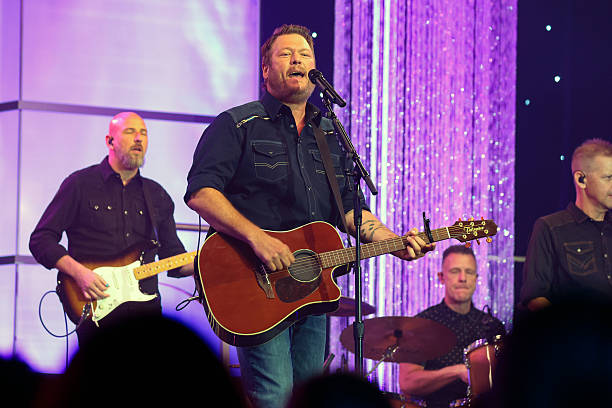
When Blake Shelton first arrived in Nashville, he was not a foregone conclusion. Like many artists before him, he came with ambition, a distinct voice, and a belief that stories from small towns could still matter in an industry increasingly shaped by trends. His breakthrough single, "Austin," did more than introduce a new artist—it signaled a storyteller capable of pairing simplicity with emotional clarity.
Over time, Shelton's presence in Nashville evolved from newcomer to fixture. He became part of the city's everyday rhythm: recording, writing, collaborating, and mentoring. Nashville was not merely a backdrop to his career; it was an active participant in shaping it. The Walk of Fame induction acknowledges that reciprocal relationship—the way an artist and a city shape one another over time.
A Career Built on Connection, Not Distance
One of Shelton's most enduring qualities has been his ability to remain accessible even as his platform expanded. His music has often leaned into themes of home, humor, resilience, and emotional honesty—elements that resonate across generations. Songs like "Honey Bee," "Mine Would Be You," and "God's Country" became cultural touchstones not because they chased novelty, but because they reflected recognizable human experiences.
That sense of connection extended beyond recorded music. Shelton's role on The Voice introduced him to audiences far outside traditional country circles, yet he never fully abandoned the identity that anchored him to Nashville. Instead, he acted as a bridge—between genres, between urban and rural narratives, and between industry polish and everyday authenticity.
Nashville's Walk of Fame: A Different Kind of Immortality

The Music City Walk of Fame is not about spectacle. It is about permanence. Located in the heart of downtown Nashville, it serves as a physical reminder of the artists who shaped the city's legacy—not only through success, but through sustained influence.
Shelton's induction reflects a broader understanding of what legacy means in modern country music. It is not solely measured by awards or sales, but by cultural presence: how an artist's work becomes part of weddings, long drives, family gatherings, and moments of private reflection. His inclusion on the Walk of Fame suggests that his voice has become part of Nashville's shared language.
The Human Dimension of the Honor
Those close to Shelton have described the honor as deeply personal. While he has received numerous industry awards, this recognition reportedly struck a different chord—one rooted in gratitude rather than competition. Nashville is a city that remembers. It remembers who stayed, who gave back, and who treated the craft with respect.
Shelton's career has been marked by long-term relationships within the industry—writers, musicians, producers, and mentors who grew alongside him. The Walk of Fame induction, in that sense, honors not only the individual, but the community built around him.
A Moment of Reflection in a Continuing Story

Importantly, this induction does not arrive at the end of Shelton's journey. It comes while he remains active, relevant, and evolving. That timing matters. It reframes the honor as recognition of impact rather than closure. Shelton is not being remembered solely for what he was, but for what he continues to represent.
In recent years, his work has increasingly emphasized reflection—on faith, responsibility, and the meaning of success. The Walk of Fame moment aligns with that phase of his career: a pause long enough to look back, but not long enough to signal an ending.
Why This Moment Resonates Beyond Nashville
For fans, Shelton's induction resonates because it mirrors their own relationship with music. Many listeners grew up alongside his songs, marking personal milestones through lyrics that felt unpretentious and familiar. Seeing him honored by Nashville validates that shared experience—it confirms that the music mattered, not just to individuals, but to the culture itself.
In an era when fame can feel fleeting, the Walk of Fame offers a counterpoint. It suggests that consistency, humility, and emotional truth still hold value. Shelton's induction reinforces the idea that country music's power lies not in reinvention for its own sake, but in staying grounded while the world changes.
A Name Set in Stone, a Voice Still Moving
When Blake Shelton's name is etched into the Music City Walk of Fame this February, it will symbolize more than personal achievement. It will mark a relationship—between an artist and a city, between music and memory, between public success and private meaning.
Nashville has many stars. But it reserves this honor for those who helped define its soul. In recognizing Blake Shelton, the city is not simply celebrating a career. It is acknowledging a voice that has lived alongside it, grown with it, and helped tell its story—one song at a time.