

What was supposed to be a night of celebration in Red Bank began like so many Garth Brooks performances do — loud, electric, and filled with the kind of anticipation only a surprise appearance can generate. Fans packed in shoulder to shoulder, expecting the familiar rush: the roar of the crowd, the opening chords, the feeling that for a few hours the outside world could wait.
Then, midway through the set, something changed.
The music slowed. The lights softened. And Garth Brooks stepped closer to the microphone — not to sing, but to speak.
His voice, usually carried by adrenaline and momentum, was quieter now. More deliberate. He told the audience he wanted to pause for a moment, not for himself, but for someone else. A woman named Renee Good. Someone whose recent death in Minneapolis had shaken him deeply.
He didn't offer details designed to shock. He didn't frame it as a headline or a statistic. Instead, Brooks spoke of Renee the way country music has always spoken about people who matter — as someone's daughter, someone's family, someone who was loved.
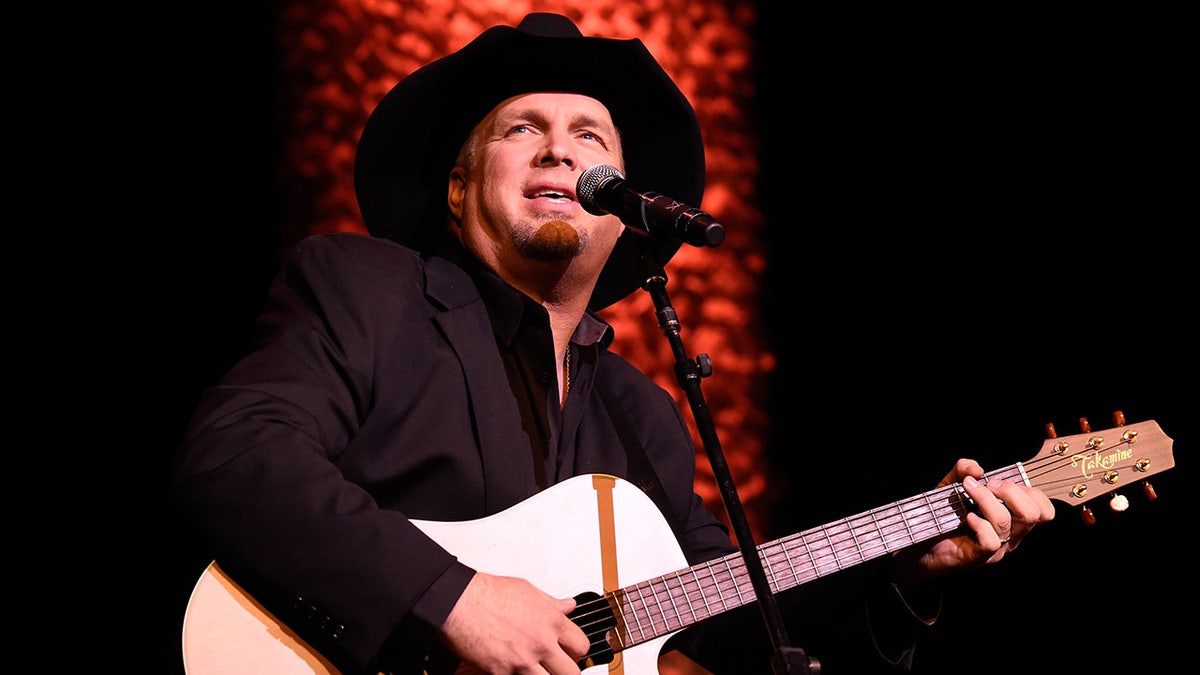
"She wasn't just a name," he reminded the room. "She was someone's whole world."
In an era where tragedies move quickly through the news cycle and disappear just as fast, Brooks asked the audience to slow down. To remember that behind every story is a human life, and behind every loss is a circle of people left carrying the weight.
The room, moments earlier buzzing with excitement, went completely still.
Those who know Garth Brooks' career understand that this instinct is not new. From the beginning, his music has centered on empathy — on placing himself inside stories that are bigger than him. Songs like "The Dance," "That Summer," and "We Shall Be Free" didn't just entertain; they asked listeners to feel alongside him.
What made this moment different was its rawness.
There was no script. No prepared speech. No visible intention to turn the moment into something shareable or viral. It felt spontaneous, driven by a need Brooks couldn't ignore. He spoke of dignity. Of compassion. Of how easily we forget that lives lost are not abstractions, but absences that echo loudly in the people left behind.
And then he did what he has always trusted most.

He let the music speak.
Without fanfare, Brooks dedicated the next song to Renee Good. The band eased in softly. No one rushed to clap. No one shouted. The audience understood, instinctively, that this was no longer about performance.
It was about remembrance.
As the melody unfolded, the room held its breath. Phones stayed down. Conversations stopped. The lyrics — familiar to many — took on new weight, reshaped by the context in which they were being offered. What might once have sounded like a love song now carried grief, grace, and the quiet ache of absence.
This is where Garth Brooks' artistry has always lived — in his ability to transform familiar songs into shared experiences. He has never treated music as something that exists apart from life. Instead, he has used it as a bridge between people who may never meet, but who recognize the same emotions when they hear them named.
When the song ended, there was no immediate applause. Just a long pause. The kind that signals respect rather than uncertainty.
Later, fans would begin asking questions. Why that night? Why that song? What had prompted Brooks to stop a high-energy show and redirect it toward grief and reflection?
Those questions, in many ways, miss the point.

Garth Brooks has never waited for the "right" moment to be human onstage. Throughout his career, he has spoken openly about love, loss, fear, and responsibility. He has walked away from the spotlight when family needed him. He has returned when the music called him back. And again and again, he has reminded audiences that country music's greatest strength is its honesty.
This moment in Red Bank fit squarely within that tradition.
It wasn't about making a statement. It was about acknowledging pain — not as spectacle, but as reality. It was about insisting that compassion still has a place in public spaces, even in rooms built for celebration.
For the people in attendance, the night became something they hadn't expected. They came for a concert. They left having shared a vigil.
And perhaps that is why it will be remembered.
Because in a world that rarely slows down for grief, Garth Brooks chose to stop the music — just long enough to remind everyone listening that every life matters, every loss deserves dignity, and sometimes the most powerful thing an artist can do is let silence, song, and shared humanity carry the meaning words cannot.