

A "42-second moment" sweeping across social media
Over the past hours, dramatic headlines have flooded social platforms declaring that Mick Jagger appeared on live television and launched a blistering verbal attack on Donald Trump, allegedly following the midnight rollout of what posts describe as the "Born-In-America Act."
According to the viral narrative, Jagger stared straight into the camera, accused Trump of "draining America's soul," went so far as to call him a "vicious old bastard," and claimed the former president was "wringing the Constitution dry." The posts describe a broadcast that spiraled out of control: four seconds of dead air, producers scrambling, missed censor cues, and a studio audience erupting into applause.
It is a story designed to feel immediate, shocking, and historic — and it has spread with extraordinary speed.
When a story feels "too perfect"

What has caught the attention of many observers is not only the severity of the alleged remarks, but the striking similarity in how the story is told across dozens of accounts. Nearly every version follows the same rhythm: a precise "42 seconds," a frozen studio, panicked producers, and a moral verdict delivered with cinematic timing.
Yet amid the intensity, key details are conspicuously absent. There is no consistent identification of the television program, the network, the host, or the exact date of the broadcast. Full, unedited footage is rarely provided. Instead, readers are urged to "watch below" or "before it's taken down," a familiar tactic in viral storytelling.
The result is a narrative that feels highly polished — but strangely untraceable.
Why Mick Jagger makes a powerful centerpiece
Mick Jagger's name carries enormous cultural weight. As the frontman of the Rolling Stones, he represents decades of rebellion, commentary, and global influence. Attaching his voice to a moment of political confrontation instantly raises the emotional stakes.
That is precisely why stories like this resonate. A figure of his stature seems capable of "stopping the room," of bending the rules of broadcast decorum. The idea that Jagger would abandon restraint to issue a warning about democracy feels plausible — even inevitable — to some audiences.
But plausibility is not the same as verification.
The political backdrop adds urgency — and confusion
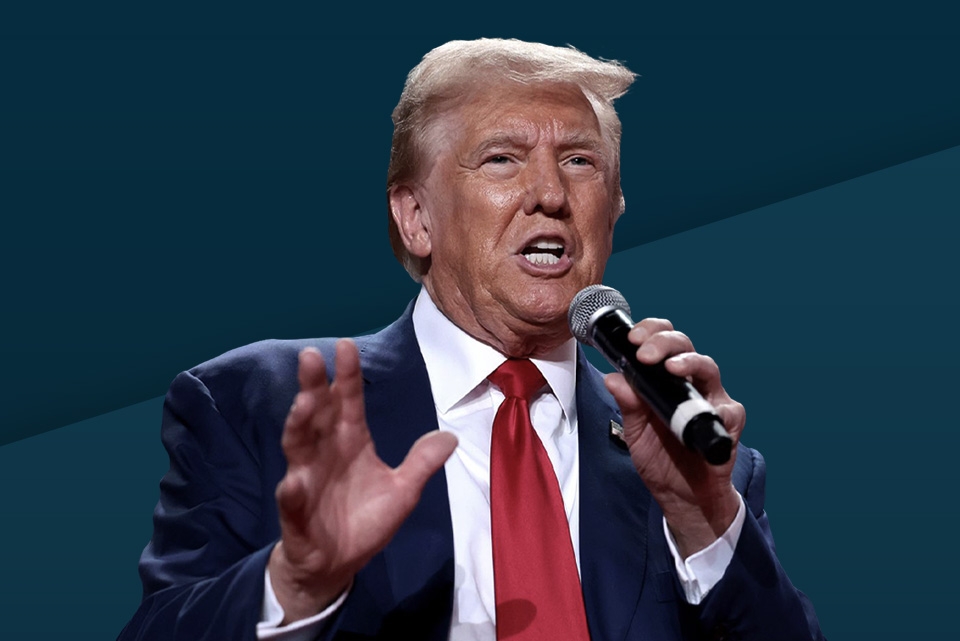
The viral story anchors itself to the "Born-In-America Act," described in posts as a policy that suddenly redefined citizenship and turned millions of people into second-class citizens overnight. That framing adds urgency and moral weight, positioning Jagger's alleged remarks as a response to immediate harm.
However, legislation with similar names has often been misunderstood or exaggerated online. Complex policy discussions are frequently reduced to simplified, emotionally charged summaries, which then become fuel for dramatic narratives — especially when paired with celebrity reactions.
In this case, the policy backdrop functions less as documented context and more as a trigger for outrage.
A familiar template in the age of viral conflict
Media analysts note that stories like this follow a recognizable template:
a famous figure, a controversial political moment, shocking language, production chaos, and an audience reaction that confirms moral victory. These elements compress a complex debate into a single "mic-drop" scene.
Such stories thrive in environments where speed matters more than sourcing, and where emotional payoff outweighs verification. The repetition of identical phrases and structures across multiple versions of the story suggests it may be less an eyewitness account and more a recycled script, adapted for different public figures.
The absence of standard broadcast evidence

When a genuine live-TV incident occurs — especially one involving language this strong — it typically leaves a clear trail: program listings, independent news coverage, archived video, and multiple firsthand recordings.
In this case, that trail is difficult to find. What circulates instead are rewritten descriptions of the same moment, often without original footage or verifiable broadcast markers. That absence does not automatically disprove the event, but it does raise reasonable doubts about its authenticity as described.
Why these stories still gain traction
Even without confirmation, narratives like this spread because they satisfy a deeper appetite: the desire to see powerful figures confront power directly, without filters or caution. They offer emotional clarity in a confusing political landscape — heroes and villains, lines drawn in the sand, applause at the end.
For many readers, the story feels true in spirit, even if the details remain uncertain. That emotional truth can be enough to carry it forward.
What readers should keep in mind
As the story continues to circulate, it serves as a reminder of how quickly modern media can blur the line between reported events and constructed moments. When a claim relies heavily on drama but lightly on verifiable detail, skepticism is not cynicism — it is literacy.
If a real confrontation involving Mick Jagger on live television did occur, clearer evidence will surface. Until then, the story remains part of a broader pattern: viral political theater shaped as much by storytelling as by facts.
A moment that reflects the times
Whether true, exaggerated, or entirely fabricated, the popularity of this narrative says something real about the moment we're living in. Audiences are hungry for voices that speak plainly, confront authority, and refuse silence.
That hunger gives stories like "THE STUDIO FROZE" their power — even before the truth has fully caught up.