

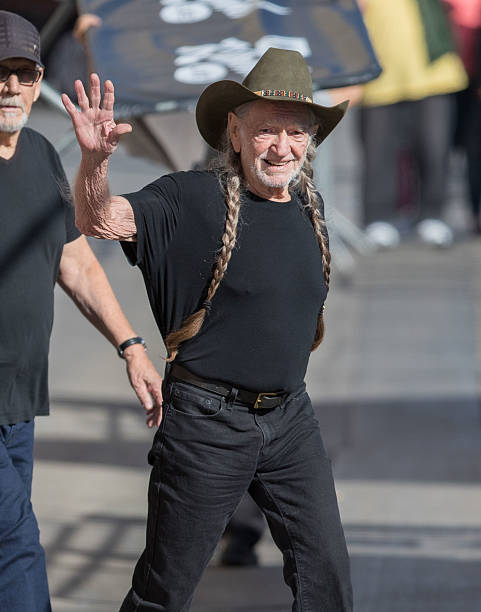
For decades, he has been the braided conscience of American music, a man whose voice carries the dust of Texas highways and the smoke of a thousand honky-tonks. Now, the long-whispered rumors have finally solidified into a cinematic reality. The extraordinary, sprawling life of Willie Nelson is officially coming to the big screen, promising a raw and unflinching look at the "Outlaw Poet" who dared to reinvent the sound of a nation.
This isn't merely a biopic; it is an exploration of an American archetype. From his humble beginnings as a small-town Texas boy to his status as a global icon of freedom, the film aims to capture the "grit, faith, and honesty" of a man who never once compromised his soul for a chart-topping hit.
From Abbott to the Ace of Hearts

The story begins in the small town of Abbott, Texas, during the Great Depression. The film is set to trace Willie's earliest days—a young boy gifted a guitar by his grandparents, findng his first melodies amidst the cotton fields and local church pews. It's a story of a "head full of songs" and a heart full of wanderlust, capturing the early struggle of a songwriter who was often told his phrasing was too jazzy and his voice too thin for the mainstream.
Audiences will follow Willie through the lean years in Nashville, where he penned legendary hits like "Crazy" and "Hello Walls" for others, all while struggling to find his own place in a "suit-and-tie" industry that demanded perfection over personality. This chapter explores the "risks nobody believed would work," leading to the pivotal moment when Willie walked away from the Nashville machine to find his truth in the burgeoning counter-culture of Austin.
The Birth of the Outlaw
If the first act of the film is about struggle, the second is about revolution. The movie promises to dive deep into the 1970s "Outlaw Country" movement. This was the era of Shotgun Willie and Red Headed Stranger, a time when Willie Nelson, alongside friends like Waylon Jennings and Kris Kristofferson, decided to strip away the over-produced "Nashville Sound" in favor of something more "battered and honest."
The film will highlight the cultural collision at the Armadillo World Headquarters in Austin, where hippies and rednecks found common ground in Willie's music. It portrays a man who didn't just change country music; he changed the American social fabric, proving that "truth you can't fake" has the power to bridge any divide.
Trigger: The Battered Partner in Crime
No story of Willie Nelson would be complete without his most loyal companion: Trigger. The film gives a starring role to his iconic, hole-worn Martin N-20 nylon-string guitar. As Willie's career progressed, Trigger aged with him, becoming a physical manifestation of the "road miles" and the "late-night honky-tonks" that define his life.
The producers have emphasized that they aren't looking for a "polished" Hollywood version of this story. Much like Willie himself, the film seeks to celebrate the imperfections—the scratches, the flat notes, and the raw emotion that comes from a life lived fully on the road. It's a tribute to a man who "never chased perfection—only honesty."
The Road Miles and the American Spirit
Beyond the music, the biopic delves into the complex man behind the braids. It explores the high stakes of his battle with the IRS, his lifelong advocacy for family farmers through Farm Aid, and his unwavering belief in personal freedom.
The screenplay reportedly doesn't shy away from the darker corners of the road—the heartbreak of failed marriages, the toll of constant touring, and the loneliness that often haunts the life of a traveling troubadour. Yet, through it all, the "American spirit" shines through. Whether he's performing for presidents or playing a surprise set at a roadside bar, Willie's story is one of resilience and an unshakeable faith in the power of a song.
A Film to be Felt, Not Just Watched

As production begins, the buzz among fans is that this won't be a typical musical montage. It is being designed as an immersive experience—one where the smell of the diesel and the hum of the tour bus feel almost tangible. "Fans are already saying this film won't just be watched… it will be felt," a production insider shared.
The movie aims to answer a fundamental question: How does a man stay so true to himself when the world keeps changing? The answer, it seems, lies in those "road miles" and the quiet moments of prayer and songwriting that occur between the shows.
The Legacy of an Icon
As Willie Nelson enters his tenth decade, this film serves as a living monument to a career that has spanned the history of modern music. It is a story of a boy from Abbott who grew up to be the poet laureate of the highway. When the credits finally roll, audiences will walk away understanding that Willie Nelson isn't just a singer—he's a reminder that the most revolutionary thing you can be in this world is yourself.