

January 15, 2026
A Performance Framed as Tribute, Felt as Family
A song can mean one thing to the world and something entirely different to the person who wrote it. That difference was on full display last night when Lukas Nelson performed "Angel Flying Too Close to the Ground," a ballad closely associated with his father, Willie Nelson. The performance, shared and discussed widely online afterward, has been described by fans as less like a cover and more like a message—one delivered from son to father in the most direct language they share: music.
Audience accounts emphasize the intimacy of the moment. Willie Nelson was seated in the front row among fellow artists and industry figures, watching without spectacle or interruption. The description repeated by multiple attendees was strikingly consistent: Willie didn't perform "legend." He performed "father"—quiet, focused, visibly moved.
Why This Song Carries a Different Weight

"Angel Flying Too Close to the Ground" is not simply a well-loved track in Willie Nelson's catalog. For many listeners, it is one of his most tender, aching expressions of devotion—gentle on the surface, emotionally heavy underneath. That emotional architecture makes it uniquely suited to moments that don't need theatrics to land.
In this context, the song's meaning sharpened. Lukas wasn't just singing a famous composition; he was stepping into a piece of family history that has been publicly cherished for decades. That is a precarious task for any artist, especially when the original songwriter is in the room. The easiest approach would have been imitation—leaning into familiar phrasing to trigger nostalgia. Accounts from the night suggest Lukas did the opposite.
No Imitation, Just Identity
Fans and viewers who shared clips highlighted what the performance avoided: a carbon copy of Willie's signature cadence. Lukas reportedly delivered the song in his own voice—gentle but steady, expressive without pushing for drama. That choice is often what separates a tribute from a re-enactment.
It also changes the emotional dynamic. Imitation can flatter the original, but it can also keep the moment trapped in the past. A personal interpretation, on the other hand, signals continuity—proof that the song can live beyond the man who wrote it without losing its soul. Listeners described Lukas' vocal approach as "quiet thank you," the kind of gratitude that doesn't ask for attention but earns it anyway.
Willie Nelson's Front-Row Presence Became the Center of the Room
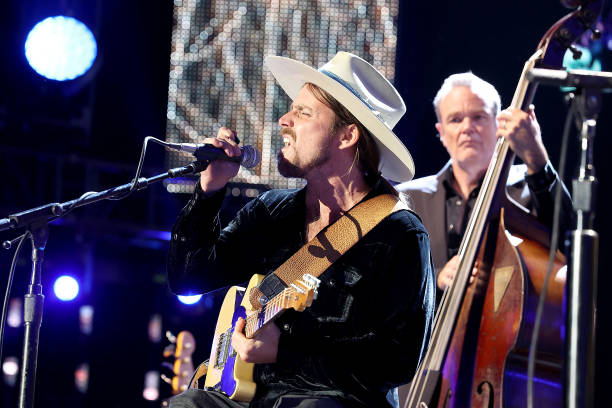
Although the spotlight was on Lukas, Willie's presence reportedly shaped the entire atmosphere. People often react loudly when they sense a "big" moment is happening—cheers, shouts, phones lifted high. But descriptions from the room suggest something different: stillness.
Attendees said Willie watched without distraction, hat lowered, gaze fixed. The visual—an elder statesman of American music listening to his son sing his words back to him—carried a weight that audience noise might have diminished. The quiet became part of the performance's power.
Some fans described seeing tears gather as the song progressed, with Willie's hat dipping lower. Whether every detail is perfectly captured by viral clips, the emotional conclusion has been clear in the public reaction: the night felt less like a crowd witnessing a show, and more like people being allowed to witness a family exchange something real.
Why the Moment Resonated Beyond the Song
In the days of constant content, moments like this stand out because they are difficult to manufacture convincingly. The staging, according to what's been shared, was minimal. The impact was relational. And that difference matters to audiences increasingly sensitive to "performance for the camera."
A son honoring a father is not a new narrative, but in this case it carries cultural weight because Willie Nelson is more than a parent—he is an icon whose music helped shape the emotional vocabulary of multiple generations. When Lukas sings a song associated with Willie's tenderness, the audience hears two stories at once: the public legend and the private family.
The resonance also reflects a larger truth about legacy artists: fans don't only want to celebrate the past. They want reassurance that something genuine continues. Not the brand. The heart.
"Some Angels Never Truly Fall": The Line Fans Can't Stop Repeating

One of the most shared interpretations of the night is that it felt like "legacy reborn." The metaphor fans keep using is flight—an angel, a feather, a breeze lifting something delicate and making it strong. The language may sound poetic, but it points to a concrete emotional experience: the sense that a father's work is being carried forward by a son who understands it from the inside.
In that framing, the performance becomes a transfer of responsibility as much as affection. The song is not just being sung; it is being safeguarded. It's an act of care.
A Reminder of What Family Moments Can Do on a Public Stage
For all the grandeur of arenas and award shows, some of the most memorable performances are the ones that reduce the distance between artist and audience rather than increase it. This moment—at least as it has been described and circulated—did exactly that.
It didn't ask viewers to marvel at perfection. It asked them to recognize love, gratitude, and time moving forward. In the end, the reason people are replaying the performance may be simple: it made a public space feel private for a few minutes, and it made a legendary name feel human.
And if that's what happened in the room, then the performance wasn't just music. It was a family bond, audible.