

There are no fireworks in the image. No stadium lights. No roar of a crowd rising in unison. Instead, Garth Brooks stands alone in the middle of an empty American street, denim jacket buttoned against the evening air, a calm half-smile settling naturally across his face. Above him, the words "Streets of America" feel less like a title and more like a statement of intent.
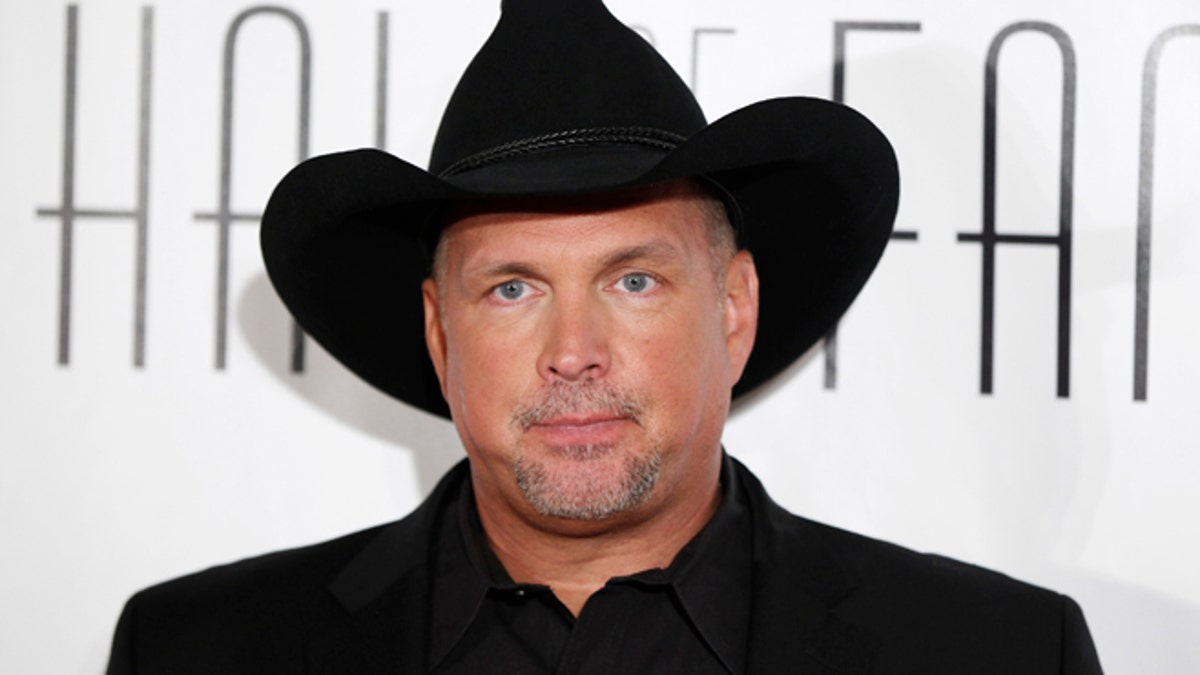
This is not the Garth Brooks who once sprinted across massive stages, dove into crowds, and turned country concerts into full-scale events. This is the man behind the phenomenon—older, steadier, and unmistakably at peace. And in that stillness, he may be saying more than he ever did at full volume.
For more than three decades, Garth Brooks has embodied the tension at the heart of country music: how to grow bigger without losing your soul. He shattered every assumption about what a country artist could be—filling football stadiums, rewriting sales records, and pulling millions of new listeners into a genre once defined by radio towers and two-lane highways. Yet even at his most explosive, Brooks never lost sight of where his songs came from.
They came from places like this street.
Small towns. Main streets after closing time. Places where life happens quietly, away from spotlights. The image captures that truth with striking simplicity. Brooks doesn't dominate the frame; he belongs to it. The buildings blur gently behind him, suggesting community rather than spectacle. The street isn't empty because it lacks life—it's empty because this moment belongs to reflection.
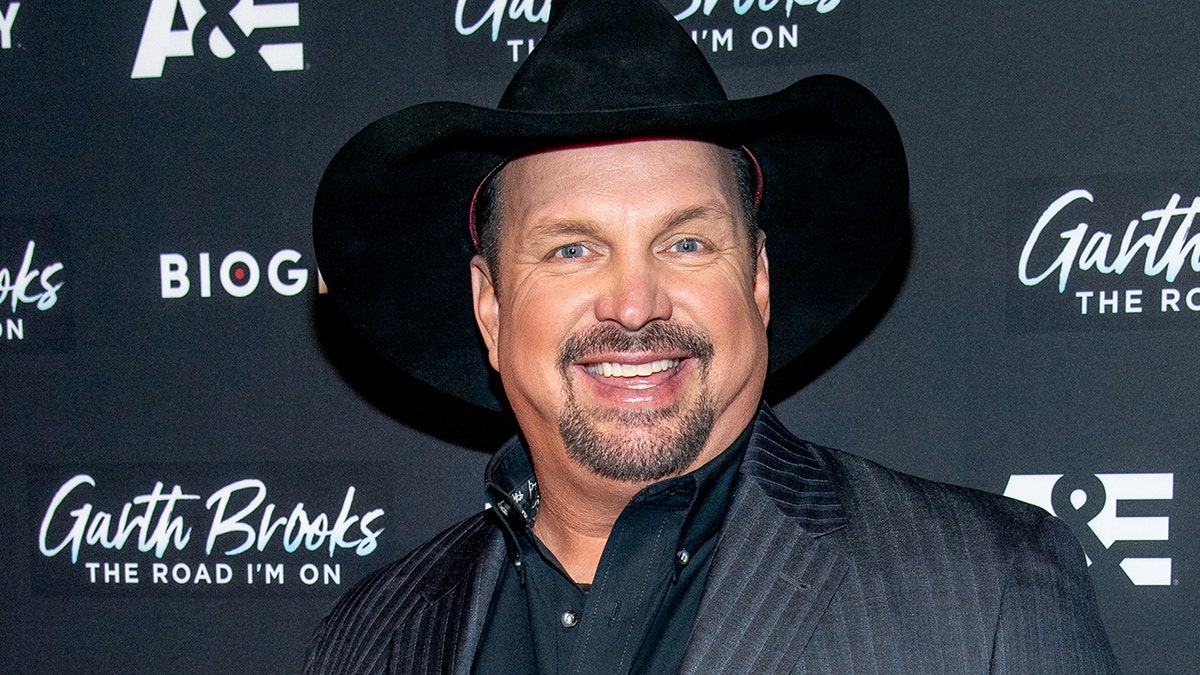
"Streets of America" reads like a love letter to the spaces that shaped him. Brooks grew up in Oklahoma, far from the glamour that later followed him. His music has always carried the imprint of those beginnings—songs about regular people, ordinary heartbreaks, and fleeting joys that don't make headlines but make lives. Even when he became one of the biggest artists in the world, he sang like someone who still remembered where he came from.
That memory feels central to this chapter of his story.
In recent years, Brooks has stepped back from relentless touring, choosing select residencies and appearances rather than constant motion. The urgency that once drove him seems replaced by intention. This image reflects that shift. There is confidence here, but no hunger. Assurance, not ambition. A man who has already proven everything he needed to prove.
And yet, there's no sense of retreat.
The street behind him stretches forward, not backward. It suggests continuity rather than closure. Brooks has always understood that legacy isn't built on how loudly you exit, but on how honestly you remain. This portrait feels like a continuation of that philosophy—a reminder that even icons are shaped by sidewalks, storefronts, and everyday places where stories quietly begin.
Country music has long wrestled with its relationship to scale. As the genre grew, some feared it would lose its grounding. Brooks challenged that fear by proving something radical: that you could go global without abandoning the local. That you could sell out stadiums and still sing for the person listening alone in their car at night. Few artists have walked that line as successfully.

The denim jacket is no accident. It's not a costume; it's a uniform—timeless, unpretentious, American. Paired with the neutral tones of the street, it reinforces the idea that Brooks doesn't need embellishment. His power has always come from connection, not image.
What makes the portrait especially compelling is its restraint. There's no guitar in his hands, yet you can almost hear the music. No lyrics on the screen, yet memories surface easily—"The Dance," "Friends in Low Places," "If Tomorrow Never Comes." Songs that lived in these streets, these towns, these lives. Songs that didn't need spectacle to matter.
In an era obsessed with reinvention and reinvention's spectacle, Garth Brooks appears content to simply stand where he is. That choice, paradoxically, feels bold. It suggests an artist confident enough to let the work speak for itself—and to let silence carry meaning.
"Streets of America" is not about nostalgia for a past that's gone. It's about honoring a foundation that never left. The places that raised him still matter. The people who listened first still matter. And the stories worth telling are still found far from the spotlight.
In this image, Garth Brooks doesn't look like a legend asking to be remembered. He looks like a man who knows exactly who he is—and where he belongs.
Sometimes, the most powerful statement an artist can make is not a roar, but a quiet presence in the middle of an ordinary street, reminding us that greatness doesn't begin on stages.
It begins at home.