

A Founder Who Was More Than "Just in the Picture"
Brian Jones was not merely an early member of The Rolling Stones. He was a key architect of the band's identity during its formative years, when they were still a young group searching for direction in London—deeply obsessed with American blues, raw sound, and an unpolished, defiant attitude. In those early days, Jones was often seen as the natural focal point onstage, combining magnetic presence with enough musical knowledge to guide the band's early path.
What continues to intrigue readers about Brian Jones is the central contradiction of his story: the man who helped define the Stones' original sound gradually lost his place as the band entered its period of explosive growth and professionalization. For many fans, this represents a classic rock-and-roll tragedy—immense creative talent colliding with the pressures of fame and the unforgiving mechanics of a band transforming into a global institution.
How Brian Jones Put the Blues Into the Stones' DNA
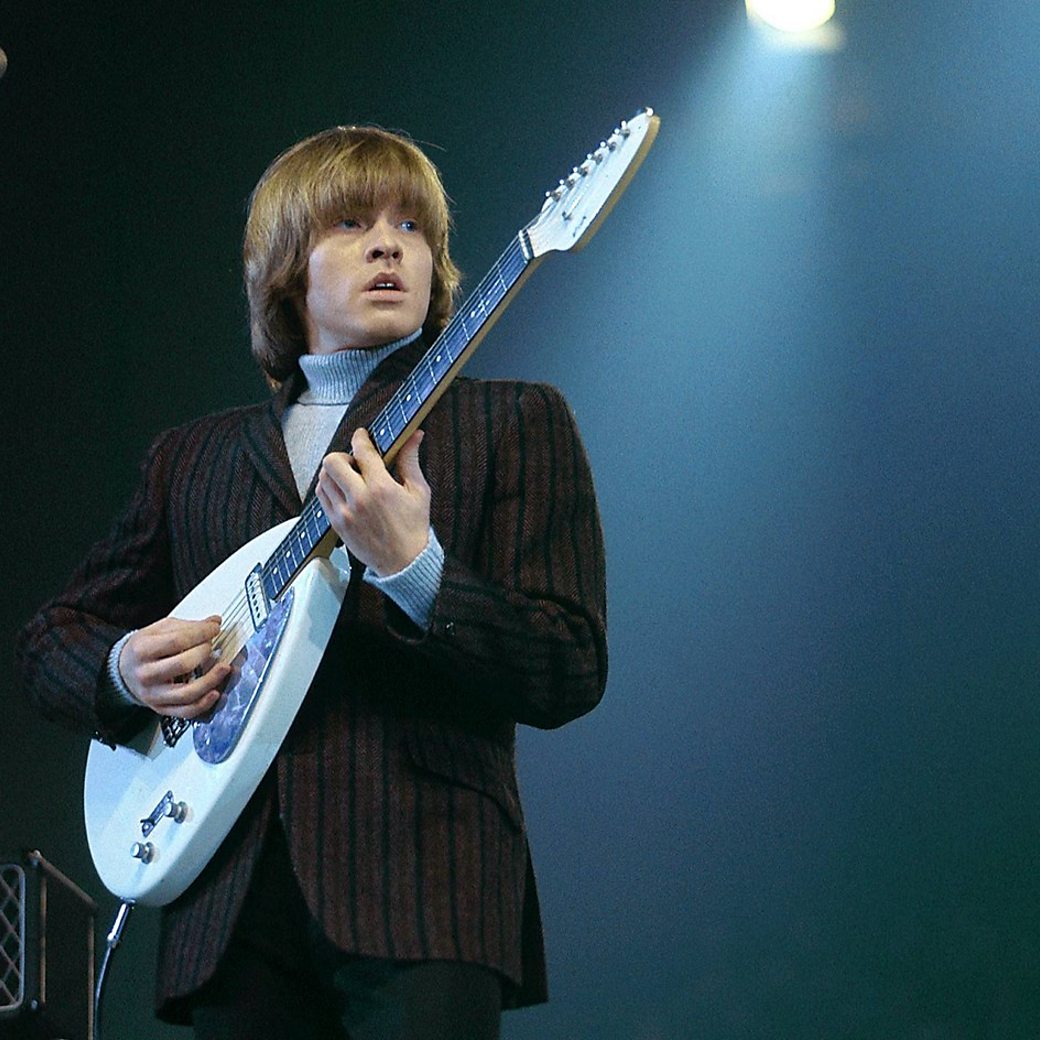
The Rolling Stones began with a deep devotion to rhythm and blues and Chicago blues. During this phase, Brian Jones stood out for his ability to capture the feel of the music—not simply copying blues songs, but reproducing their grit, looseness, and emotional tension. His influence helped the band sound authentic rather than imitative, especially in their earliest recordings and club performances.
A lesser-known but fascinating detail is Jones's instinct as a "sound hunter." When a track risked feeling flat, he looked for a sonic texture that could subtly transform it—a harmonica line, a slide guitar phrase, or an unexpected instrument that shifted the atmosphere. These choices were rarely flashy, but they often gave songs their depth and character.
The "Secret Weapon": A Multi-Instrumentalist's Mindset
Brian Jones is remembered as a remarkably versatile musician. Beyond guitar and harmonica, he explored instruments such as the sitar, dulcimer, marimba, and recorder. What made this significant was not the novelty itself, but how deliberately he used these sounds. Rather than showcasing technical prowess, Jones treated instruments as storytelling tools—placing textures where they could evoke mystery, tension, or emotional nuance.
This curiosity made him especially influential as the Stones began expanding their creative boundaries in the mid-1960s. While British rock was moving toward experimentation, Jones was eager to introduce unfamiliar timbres into the studio. Careful listeners can still detect subtle, unconventional layers in many recordings from that period—small details that quietly shape the songs' moods and often trace back to Jones.
When Creative Power Shifted, So Did Jones's Place

Brian Jones's diminishing role in the band was not purely a musical issue. It coincided with a broader shift in internal dynamics, particularly as songwriting authority and strategic direction became more centralized. As the Stones entered a demanding cycle of recording, touring, media exposure, and brand management, stability and discipline became essential—qualities Jones increasingly struggled to maintain.
Creative differences are often cited, but the deeper question was existential: would the Rolling Stones remain a raw blues-based group, or evolve into a tightly organized rock powerhouse capable of sustained chart dominance? Within this transformation, the man who once embodied the band's spirit came to seem out of step with its new structure—less compatible with a system that required consistency and long-term focus.
Personal Crisis: Addiction, Legal Trouble, and Isolation

Brian Jones also faced severe personal struggles, widely documented as involving substance abuse and legal issues. These challenges affected not only his health, but also his reliability—his ability to function in the studio, appear on time, and perform consistently. For a band at the height of its ascent, patience was limited.
One of the most tragic aspects of Jones's decline was the social isolation that followed. As his behavior became unpredictable, those around him grew cautious, emotionally and professionally. Distance replaced closeness, and support gradually eroded. For Jones, being sidelined within the very band he helped create became a deeply personal and painful experience—one that intensified his sense of alienation.
A Lasting Legacy: Innovation and the Cost of Fame
Today, Brian Jones is remembered as a musical innovator—not because of a single signature technique, but because he embodied a mindset of sonic exploration. His legacy lies in showing how a rock band could broaden its palette, draw from diverse musical traditions, and use texture as emotional language.
The question that continues to follow his story is an unanswerable one: how might the Rolling Stones have evolved if Brian Jones had remained healthy and engaged? While history offers no certainty, one truth remains clear—the early sound of the Stones carried a distinct character, and Brian Jones was central to that identity. He was the man who lit the fire, only to be quietly consumed by the flames he helped ignite.