

January 21, 2026
A Big-Screen Portrait Aims Beyond the Greatest-Hits Version
A newly promoted feature film about Willie Nelson is being framed as more than a music biopic. In the project's marketing language, it is positioned as a cinematic portrait of the "man behind the myth"—a story that stretches from small-town Texas beginnings to global stages, with an emphasis on the decisions and costs that shaped an outlaw identity.
At this stage, many details circulating online appear to come from promotional copy rather than independently reported production information. Without confirmed credits, distribution details, or official release specifics presented here, the clearest verified element is the framing: the film intends to tell Willie Nelson's life story as a narrative about freedom, endurance, and refusal to fit industry expectations.
From Texas Dance Halls to Industry Resistance

The storyline being presented follows a familiar arc—early roots, struggle, rejection, breakthrough—but places special weight on the moments when Willie Nelson didn't align neatly with the system around him. Promotional descriptions highlight dusty dance halls, Nashville skepticism, and the tension between commercial norms and artistic conviction.
This framing matters because Willie's cultural reputation is built on exactly that tension. His career is often remembered not simply as success, but as persistence: the ability to keep creating and keep moving while the industry changed rules, fashions, and definitions of what "country" should sound like. A film that treats those conflicts seriously—rather than rushing to the next chart milestone—would likely resonate with fans who see Willie's legacy as philosophical as much as musical.
More Than Celebrity: A Story About Freedom and Refusal
The strongest theme in the film's public description is freedom—freedom as an artistic principle and freedom as a way of living. The narrative reportedly emphasizes the idea that Willie Nelson didn't build a career by fitting the mold, but by ignoring it: writing songs for the broken and restless, choosing authenticity over polish, and maintaining humor even when pressure mounted.
That perspective aligns with why his work has endured across generations. Willie's songs often feel less like performance and more like companionship—music that meets listeners where they are rather than above them. If the film captures that quality, it could operate less like a celebrity biography and more like a character study of a person who treated truth as a craft.
The Film's Emotional Engine: Resilience Through Loss and Pushback

The promotional framing also suggests the film will explore difficult chapters: financial hardship, industry backlash, health challenges, and personal loss. Here, it's important to separate broad themes from specific claims. Without on-the-record details or verified production notes, these references should be understood as thematic signposts rather than confirmed scene-by-scene depictions.
Still, the emphasis on resilience is coherent with Willie Nelson's public story. Longevity in music rarely comes without strain, and Willie's decades-long relevance is part of what makes any in-depth portrayal compelling. Viewers aren't only curious about what he achieved; they are curious about what he survived—and how he stayed recognizable to himself through it.
The Songs Are Here—But the Movie Says It Goes Deeper
The film is expected to feature signature songs closely associated with Willie Nelson's mainstream identity, including "On the Road Again," "Always on My Mind," and "Blue Eyes Crying in the Rain." These tracks function like cultural landmarks; even casual listeners can locate memories inside them.
But the film's hook is explicit: it claims to go deeper than the music. That promise is significant because music biopics often struggle with a common problem—reducing a life to a playlist. A deeper approach would focus on what the songs were built from: the private choices, the contradictions, and the emotional costs that don't fit neatly into a montage.
The "Unseen Chapter" Tease: A Marketing Move With Real Stakes
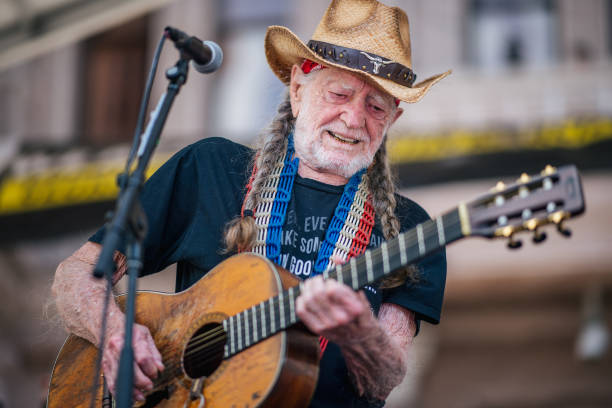
The project's promotional language emphasizes one central tease: "one chapter of Willie Nelson's life most people never truly saw," framed as something that "changes how we understand the legend forever."
This kind of tease is effective—and also worth treating carefully. In entertainment marketing, an "unseen chapter" can mean anything from newly surfaced archival material to a reframing of a well-known period through a different lens. It can also be used to create curiosity without promising a specific revelation.
A responsible expectation is this: the film may offer a new emotional interpretation rather than a sensational secret. The most meaningful "unseen chapters" are often not scandalous—they're human. They reveal the quieter truth that was always there, but rarely centered.
What Would Make This Film Truly Different
For a Willie Nelson feature film to stand out, it would need to avoid two traps: myth-making and simplification.
A myth-making version turns Willie into an untouchable symbol. A simplified version turns him into a sequence of career beats. The more interesting—and more truthful—approach would treat him as a living contradiction: a rebel with gentleness, a public icon with private boundaries, a man whose voice can sound light and heavy in the same line.
If the film commits to that complexity, it could become the rare biographical project that expands understanding rather than repeating familiar slogans.
Bottom Line
Right now, the film is being positioned as a big-screen tribute to Willie Nelson's outlaw spirit—anchored by iconic songs, but aimed at revealing the person behind the persona. The "unseen chapter" tease is doing much of the promotional work, and whether it pays off will depend on the film's willingness to trade mythology for humanity.
If it succeeds, audiences won't just watch Willie Nelson's story. They'll recognize parts of their own: the hunger for freedom, the cost of staying true, and the quiet strength it takes to keep showing up—year after year—without needing applause to prove anything.